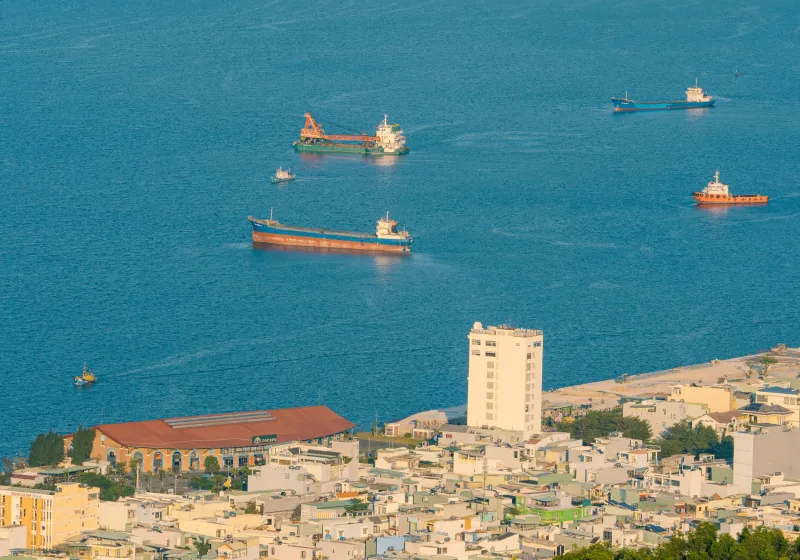
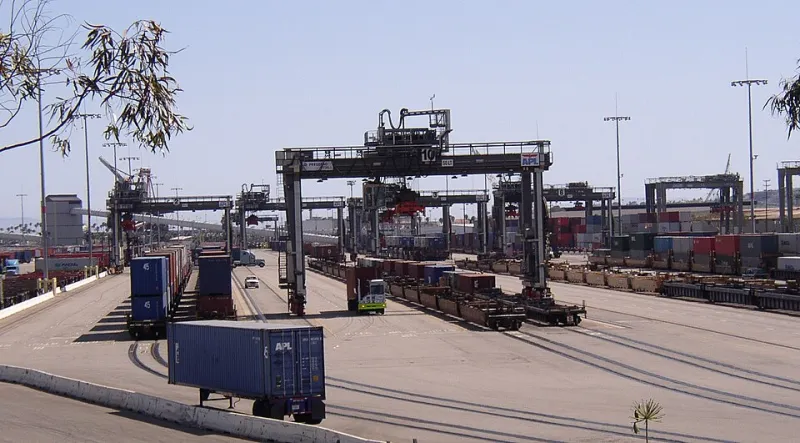
You Moved the Factory. You Forgot to Move the Supply Chain.
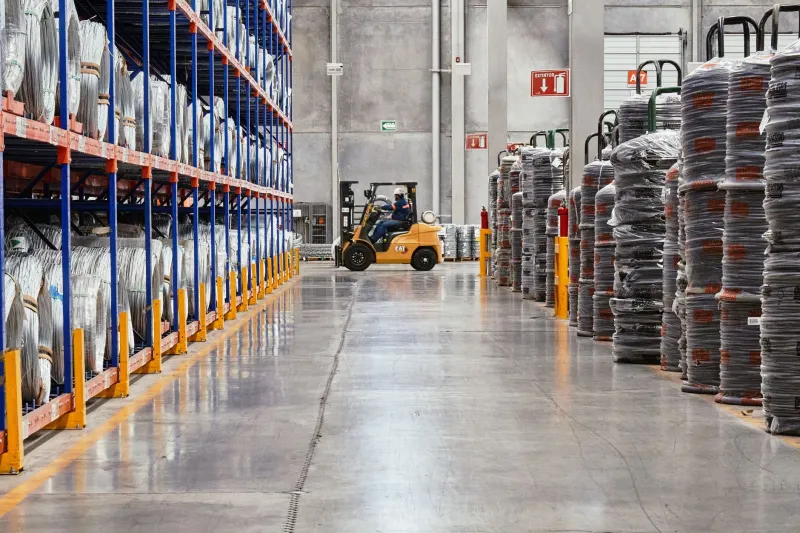
There is a particular kind of strategic mistake that looks like success for the first twelve months. The announcement gets made, the press release goes out, the CFO cites the labor cost differential in an earnings call, and the board approves the capital allocation. Production begins in Vietnam, and for a brief window, the numbers confirm the thesis. Then the inefficiencies accumulate. Freight costs run 30 percent over projection. Lead times extend. Inventory buffers bloat to compensate for unpredictability. Eighteen months after the ribbon-cutting, the total landed cost advantage has quietly evaporated, and nobody in the organization can quite explain why.
This is the nearshoring trap—and it is catching more US companies than most are willing to publicly acknowledge.
The Fundamental Confusion Between Factory Location and Supply Chain Design
The mistake is conceptually simple even when it is operationally complex. Many US companies approach Vietnam manufacturing relocation as a production decision: find a qualified contract manufacturer or establish a company-owned facility, negotiate favorable terms, and begin shifting volume. The supply chain—the network of freight providers, customs brokers, inventory systems, and carrier contracts that moves goods from factory to customer—is treated as a downstream concern, something to be sorted out once production is running.
This sequencing is precisely backwards. Supply chain infrastructure is not a plug-and-play system that adapts automatically to a new origin point. It is a carefully constructed network of relationships, contracts, and operational protocols that was built for a specific geography. When you move production from China to Vietnam, or from Mexico to Vietnam, you are not simply changing one variable in an otherwise stable equation. You are changing the origin node of an entire system—and if the rest of the system is not redesigned to match, the mismatch generates cost and delay at every subsequent step.
Consider a simplified example. A US electronics importer moves component assembly from Shenzhen to a facility outside Hanoi. The company retains its existing US-based customs broker, its existing ocean carrier contracts routed through West Coast ports, and its existing inventory replenishment logic, which was calibrated for the transit times and lead time variability of South China freight. Every one of those elements was optimized for a different origin geography. Applied to Vietnam, they produce suboptimal outcomes—not because they are poorly designed, but because they were designed for somewhere else.
The Hidden Cost Multipliers Nobody Budgets For
The financial case for Vietnam manufacturing typically rests on a labor cost differential that is real and significant. Vietnamese manufacturing wages remain meaningfully lower than in coastal China, and that gap supports a genuine landed cost advantage for labor-intensive product categories. The problem is that the analysis often stops there.
What frequently goes unmodeled are the logistics cost multipliers that Vietnam's supply chain environment introduces. Domestic freight from inland manufacturing zones to major ports or airports is more expensive per kilometer than equivalent movements in more developed logistics markets. Customs clearance, while improving, still carries greater variability than experienced importers from mature manufacturing regions are accustomed to. Air freight capacity out of Vietnam, particularly from secondary cities, remains constrained relative to demand—which means spot rates spike sharply during peak seasons and companies without advance capacity commitments pay a significant premium.
There are also softer costs that resist easy quantification: the management bandwidth consumed by troubleshooting a supply chain that was not designed for its current origin, the inventory carrying costs generated by safety stock buffers built to absorb lead time unpredictability, and the expediting costs incurred when those buffers prove insufficient. Taken together, these multipliers can easily consume half or more of the labor cost savings that justified the relocation in the first place.
What Supply Chain Redesign Actually Requires
Building a Vietnam-native supply chain rather than a China supply chain with Vietnam substituted at the origin requires deliberate work across several dimensions.
The first is carrier and forwarder network reconstruction. The freight providers that served your China business may not have the Vietnam-specific depth—origin infrastructure, customs relationships, carrier agreements—to serve your Vietnam business equally well. Evaluating and selecting logistics partners based on their Vietnam capabilities specifically, rather than their global brand or existing relationship value, is a necessary starting point.
The second is lead time recalibration. Vietnam-to-US transit times, particularly for ocean freight, differ from China-to-US times in ways that depend heavily on routing, port selection, and service frequency. Inventory replenishment models, reorder points, and safety stock calculations must be rebuilt using Vietnam-specific data rather than inherited assumptions. Companies that fail to do this systematically find themselves either chronically understocked or carrying excess inventory that erodes the working capital advantages of lower production costs.
The third is local partner development. Vietnam's logistics ecosystem includes a range of domestic providers—regional trucking companies, inland container depot operators, local customs agents—whose knowledge of specific corridors and facilities is not replicable by global forwarders operating from a distance. Developing relationships with these local specialists, and integrating them into a coherent operational model, is one of the most reliable ways to recover the predictability that supply chain relocation initially destroys.
The Inertia Problem and How to Break It
Organizational inertia is perhaps the most underappreciated obstacle to effective supply chain redesign. The people responsible for logistics operations have built their expertise, their vendor relationships, and their performance metrics around the existing system. Redesigning that system requires them to acknowledge that what they built no longer fits—and to invest significant effort in building something new, often with limited additional resources and against the backdrop of ongoing operational demands.
Leadership alignment is essential. Supply chain redesign for a Vietnam manufacturing footprint cannot be delegated entirely to the logistics function. It requires executive sponsorship, cross-functional coordination between procurement, operations, and finance, and a willingness to absorb short-term disruption in exchange for long-term structural improvement.
The companies that navigate this transition successfully tend to share one characteristic: they treat the supply chain redesign as a project of equal strategic weight to the manufacturing relocation itself, not as a follow-on cleanup effort. They plan it in parallel, fund it appropriately, and measure its outcomes with the same rigor they apply to production metrics.
Vietnam offers genuine, substantial advantages for US companies willing to build the supply chain infrastructure those advantages require. At FPT MultiAir, we have seen both outcomes—companies that captured the full value of their Vietnam investment and companies that did not. The difference, almost without exception, was whether they moved the supply chain when they moved the factory.