The Speed Illusion: How Ocean-Rail Combinations from Vietnam Are Outpacing Air Freight for Some US Importers
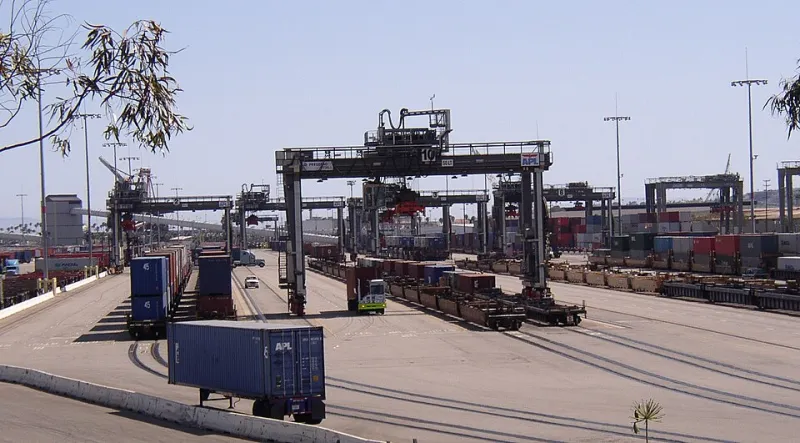
Photo: Unknown, CC BY-SA 3.0, via Wikimedia Commons
Rethinking the Fastest Route
In logistics, the assumption that air freight equals speed is so deeply embedded that it rarely gets questioned. When a US buyer needs goods from Vietnam quickly, the conversation almost immediately turns to which airline, which gateway, and what the per-kilogram rate looks like. Ocean freight is dismissed as the slow option—something for bulk shipments and patient timelines.
That framing, however, is increasingly outdated. A growing number of US importers sourcing from Vietnam are discovering that carefully constructed multimodal routes—combining ocean transit with rail and ground distribution—can match or beat air freight transit times on specific lanes, while delivering cost savings that fundamentally change the economics of their supply chains.
This is not a universal truth. There are shipments for which air freight remains the only practical option. But the gap between air and the best multimodal alternatives has narrowed considerably, and many US companies are still making routing decisions based on assumptions that no longer reflect current infrastructure realities.
Where the Air Freight Clock Actually Starts
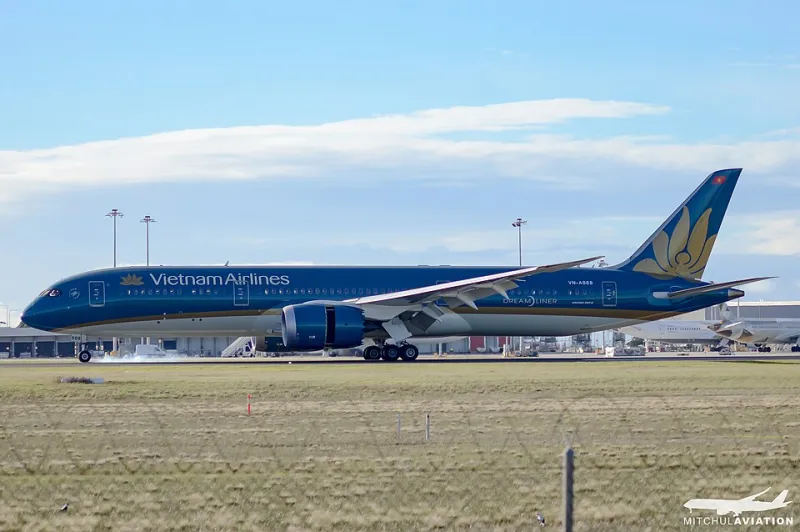
The transit time comparison between air and ocean-rail tends to be distorted by how each option is measured. Air freight is often quoted as a door-to-door time, but the figure presented to buyers typically reflects only the flight time—perhaps 18 to 22 hours from Ho Chi Minh City or Hanoi to a US gateway like Los Angeles or Chicago.
What that figure omits is significant. Cargo must be trucked from the factory to the export airport. It must clear Vietnamese customs, pass security screening, and be consolidated with other freight before loading. At the US destination, it must clear customs—a process that, at major air cargo hubs like LAX or JFK, can take 24 to 72 hours under normal conditions and longer during peak periods or when shipments are flagged for examination.
From the US gateway airport, goods must still be trucked to a distribution center or end customer. For importers in inland markets—Dallas, Chicago, Atlanta, Kansas City—that final-mile trucking leg can add one to two days.
The realistic door-to-door time for air freight from a Vietnamese factory to an inland US customer frequently runs seven to ten days when all stages are accounted for honestly.
The Ocean-Rail Timeline Reconsidered
Modern ocean transit from Ho Chi Minh City or Haiphong to the US West Coast—specifically to the ports of Los Angeles, Long Beach, or Seattle—runs approximately 14 to 18 days for most services. That is a meaningful gap from air freight, and on its face it appears to confirm the conventional wisdom.
But the comparison changes substantially when the destination is an inland US market and when ocean-rail intermodal connections are factored in.
US West Coast ports, particularly Los Angeles and Long Beach, are directly connected to an extensive domestic rail network. Intermodal trains from these ports reach Chicago in approximately two days, Dallas in two to three days, and Atlanta in three to four days. When a shipment arrives at the port and is transferred efficiently to rail—a process that has improved considerably as port operators have invested in on-dock rail facilities—the total transit from Vietnamese factory to inland US destination can fall into the 18- to 22-day range.
For importers with sufficient planning lead time, that total is not materially longer than air freight, particularly when pre-clearance programs and trusted shipper status reduce customs dwell time at the port.
Case Study: A Furniture Importer's Routing Shift
A US home goods company sourcing upholstered furniture and decorative accessories from manufacturers in Binh Duong province, near Ho Chi Minh City, had been using air freight for its faster-moving SKUs—items that needed to reach its East Coast distribution center within a defined replenishment window.
The company's logistics team conducted a full transit audit and found that its air freight shipments were consistently taking nine to eleven days door-to-door, once factory pickup, export processing, flight time, customs clearance at JFK, and trucking to its New Jersey distribution center were all counted.
Working with its freight forwarder, the company tested an ocean-rail route: ocean from Ho Chi Minh City to Long Beach, on-dock rail transfer to Chicago, and then truck to the New Jersey facility. Total door-to-door time came in at 21 to 24 days—longer than air, but by a smaller margin than anticipated.
For products with a 30-day replenishment cycle, the company determined it could absorb the additional transit time by adjusting its order frequency. The cost savings—approximately 65% per kilogram compared to air—allowed it to ship higher volumes per order, reducing the frequency of replenishment runs and improving its per-unit logistics cost substantially.
The Hybrid Model: Air to Regional Airports, Ground to Final Destination
A separate multimodal strategy gaining traction involves using air freight not to major gateway hubs but to secondary or regional US airports that offer faster customs processing and proximity to specific distribution markets.
For example, air shipments from Vietnam routed to Dallas/Fort Worth or Memphis rather than LAX or JFK can benefit from shorter customs queues and faster ground transfer to distribution facilities in the South and Midwest. Memphis, in particular, functions as a major logistics hub with direct connections to FedEx's global sorting network, making it an efficient entry point for time-sensitive goods that need rapid distribution across the central US.
Combining this airport selection strategy with pre-arrival customs filing and automated broker clearance can compress the US-side portion of the transit time enough to make a meaningful difference in total delivery performance.
When Air Freight Remains the Right Answer
None of this is to suggest that air freight from Vietnam is being supplanted. For genuinely time-critical shipments—factory defects requiring urgent replacement parts, seasonal goods with a narrow retail window, pharmaceutical or perishable cargo—air freight's speed premium is real and justifiable.
Similarly, for low-volume, high-value shipments where the per-kilogram cost of air freight is small relative to the value of the goods, the cost comparison with ocean-rail becomes less compelling.
The point is not that air freight is wrong. It is that air freight is not automatically right—and that US importers sourcing from Vietnam owe it to their supply chain economics to examine the full transit picture before defaulting to the option that feels fastest.
Building the Routing Decision Into the Planning Process
The most effective way to apply these insights is to build routing scenario analysis into the procurement and logistics planning process, rather than treating it as an afterthought when a shipment is already on the dock.
For each product category, importers should establish a maximum acceptable transit time, a target cost-per-unit for logistics, and a minimum planning lead time. With those parameters defined, the routing decision becomes a data-driven exercise rather than an assumption-driven one.
Vietnam's logistics infrastructure continues to develop, and multimodal options are expanding as port capacity, rail connectivity, and digital freight platforms improve. The companies that build flexible routing frameworks now will be better positioned to respond as those options evolve.