Beyond Tan Son Nhat: How Vietnam's Regional Airports Are Reshaping Air Freight Options for American Buyers
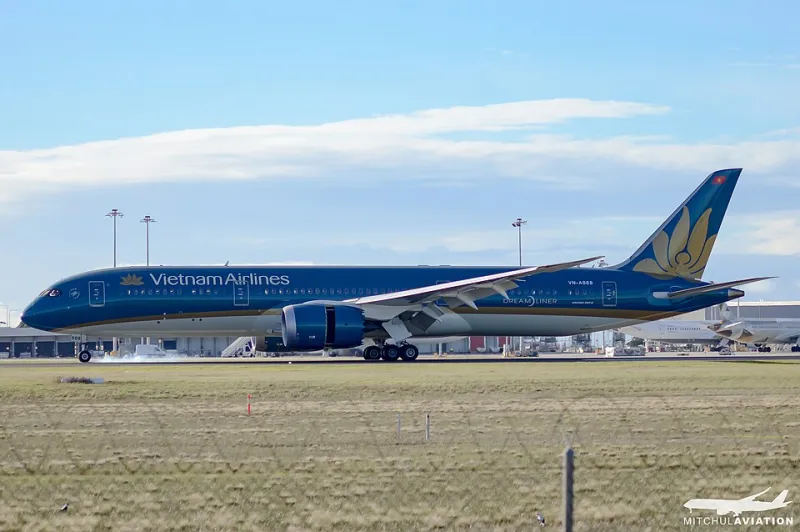
Photo: Mitchul Hope, CC BY-SA 2.0, via Wikimedia Commons
For years, the calculus for US companies moving air freight out of Vietnam has been relatively straightforward: route through Tan Son Nhat International Airport in Ho Chi Minh City, or—for northern manufacturers—through Noi Bai International Airport in Hanoi. These two gateways have historically handled the overwhelming majority of Vietnam's international air cargo volume, and for good reason. They offered the widest carrier selection, the most frequent departures, and the most established customs infrastructure.
But that calculus is shifting. A combination of sustained capacity pressure at Tan Son Nhat, accelerating infrastructure investment at secondary airports, and a growing appetite among international carriers to develop new Vietnam route structures is opening up alternatives that, until recently, most US importers had little reason to consider. For American companies managing time-sensitive or high-value shipments from Vietnam, understanding this emerging airport landscape may represent one of the more underappreciated levers available for optimizing their supply chains.
The Tan Son Nhat Bottleneck: A Structural Constraint, Not a Temporary Condition
Tan Son Nhat's limitations are well-documented among logistics professionals who work regularly in Southeast Asia. The airport sits within one of the most densely developed urban areas in Vietnam, constraining any meaningful physical expansion of its cargo apron or terminal facilities. Its international cargo terminal has operated under significant throughput pressure during peak seasons, contributing to ground handling delays, booking rollover events, and elevated handling fees that erode the cost competitiveness of air freight for price-sensitive shipments.
Vietnam's Civil Aviation Authority has acknowledged these constraints publicly, and the country's long-term airport development planning—anchored by the Long Thanh International Airport project southeast of Ho Chi Minh City—reflects an institutional recognition that Tan Son Nhat cannot indefinitely absorb Vietnam's growing export volumes. Long Thanh, however, remains years from full operational capacity. In the interim, the pressure on Tan Son Nhat is real, and the search for alternatives is no longer theoretical.
Noi Bai: The Northern Anchor Gains Momentum
Noi Bai International Airport, serving Hanoi and the broader northern industrial corridor, has historically been positioned as the secondary option for Vietnam air freight—capable, but less internationally connected than Tan Son Nhat. That characterization is becoming outdated.
Capacity expansion work at Noi Bai's international cargo terminal has meaningfully increased throughput capability over the past several years, and the airport now serves as the primary export gateway for manufacturers concentrated in the Bac Ninh, Bac Giang, and Hai Phong industrial zones—areas that have seen some of the most significant foreign direct investment inflows in Vietnam as companies relocate production capacity from China.
For US importers sourcing electronics, semiconductors, or precision-engineered components from northern Vietnam, routing through Noi Bai rather than trucking goods south to Ho Chi Minh City can reduce domestic transit time by one to two days, lower inland transportation costs, and eliminate exposure to consolidation congestion in the south. Several major international cargo carriers—including dedicated freighter operators—have expanded their Noi Bai schedules in response to growing demand from this manufacturing corridor.
The practical implication for US buyers: if your supplier base is concentrated north of Da Nang, a Noi Bai-routed air freight strategy deserves serious evaluation against the default assumption of Ho Chi Minh City departure.
Da Nang: The Central Hub With Untapped Potential
Da Nang International Airport occupies a geographically strategic position in central Vietnam, serving as a natural midpoint between the northern manufacturing clusters and the southern commercial hub. While Da Nang has historically been associated more with passenger tourism than with industrial freight, that profile is evolving.
The airport has benefited from infrastructure upgrades to its cargo handling facilities and has attracted growing interest from regional carriers looking to establish central Vietnam as a viable cargo origin point. Da Nang's relative proximity to manufacturers in Quang Nam, Quang Ngai, and the broader central coast region—areas increasingly active in furniture, textiles, and light manufacturing—makes it a logistically sensible departure point for goods that would otherwise require a long overland journey to either Hanoi or Ho Chi Minh City.
For US importers whose supplier relationships extend into central Vietnam, Da Nang offers an opportunity to reduce domestic freight costs and improve schedule reliability. Carrier options remain more limited than at the two primary gateways, and frequency of international departures is lower, but for the right shipment profile—particularly consolidated cargo with flexible departure windows—Da Nang can be a cost-effective alternative.
Can Tho: The Mekong Delta's Emerging Logistics Gateway
Can Tho International Airport, serving the Mekong Delta region in southern Vietnam, represents perhaps the most forward-looking development in Vietnam's air freight geography. The Mekong Delta is a significant production region for agricultural products, processed foods, seafood, and consumer goods—categories with substantial US import demand.
Historically, goods originating in the Delta were routed overland to Ho Chi Minh City for export, adding time, cost, and handling complexity. Can Tho's ongoing capacity development and its designation as a priority airport in Vietnam's national aviation infrastructure plan suggest that this routing assumption may become less necessary over time. While Can Tho is not yet positioned to handle the volume or carrier diversity of Tan Son Nhat or Noi Bai, its trajectory is worth monitoring for US companies with Mekong Delta supplier relationships.
A Decision Framework for US Importers
Choosing the right departure airport for Vietnam air freight is not a one-size-fits-all exercise. Several variables should inform the decision:
Supplier location relative to airport options. The domestic trucking cost and time savings from routing through a closer regional airport can offset the lower carrier frequency or slightly higher per-kilo rates that may apply at secondary gateways.
Shipment urgency and schedule flexibility. High-urgency shipments with narrow delivery windows may still warrant Tan Son Nhat or Noi Bai routing due to their superior departure frequency. Shipments with more flexible windows can absorb the scheduling constraints of secondary airports in exchange for lower handling fees and reduced congestion risk.
Cargo type and carrier requirements. Certain cargo categories—temperature-sensitive goods, oversized freight, or shipments requiring specialized handling—may not yet have adequate infrastructure support at Vietnam's regional airports. Verify handling capabilities before committing to an alternative routing.
Seasonal demand patterns. During peak export periods, the capacity advantage of secondary airports is most pronounced. Building regional airport options into your peak-season freight strategy can provide meaningful protection against the booking rollovers and rate spikes that characterize Tan Son Nhat during high-demand periods.
The Strategic Case for Route Diversification
The broader lesson from Vietnam's evolving airport landscape is one that applies to supply chain strategy generally: concentration creates vulnerability. US importers who have built their Vietnam freight operations around a single departure gateway—regardless of which one—are exposed to disruptions that a more diversified routing strategy could absorb.
At FPT MultiAir, we work with US clients to evaluate their full range of Vietnam departure options, match shipment profiles to the most appropriate routing, and build the carrier relationships at secondary airports that make diversification practically executable rather than theoretically attractive. Vietnam's air freight geography is more dynamic than it was five years ago. The importers who recognize that shift early are the ones who will be best positioned to move faster, spend smarter, and build supply chains that hold up when conditions get difficult.