The Real Edge in Vietnam-US Supply Chains Isn't Speed—It's Knowing What's Actually Happening

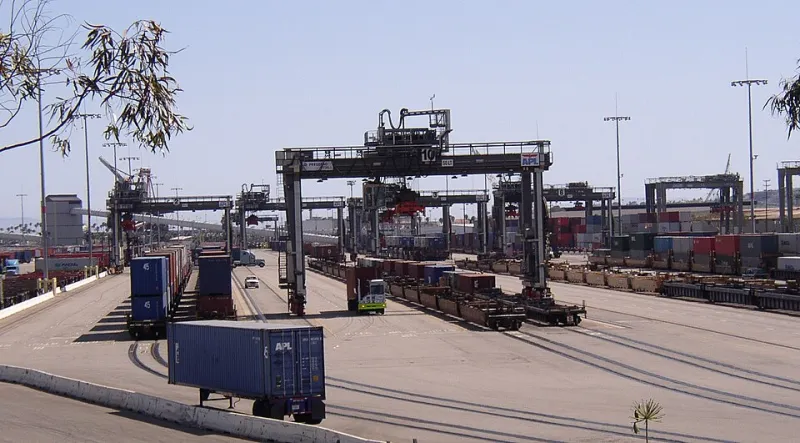
Photo: Jean-Paul Pirnay, CC BY 4.0, via Wikimedia Commons
Ask a US importer what they want most from their Vietnam freight operation, and the answer is almost always some version of faster. Faster transit times, faster customs clearance, faster delivery to their distribution centers on the East or West Coast. The entire conversation around Vietnam-US logistics tends to orbit around speed as the primary variable—the thing that separates a good supply chain from a great one.
This framing is understandable. It is also, in most cases, the wrong place to focus.
The importers who are genuinely outperforming their competitors in Vietnam-US supply chains are not, by and large, moving goods significantly faster than everyone else. They are moving goods with significantly more confidence—because they know, at any given moment, what is actually happening to their shipments, why disruptions are occurring, and what their options are before a delay becomes a crisis. That distinction—between speed and informed decision-making—is where the real competitive advantage lives.
The Illusion of the Faster Competitor
When US importers notice that a competitor seems to be replenishing inventory more quickly or responding to demand surges with less friction, the instinct is to assume that competitor has found a faster freight route, a better carrier, or a more aggressive transit agreement. Sometimes that is true. More often, the explanation is less dramatic and more instructive.
Companies that appear to move faster from Vietnam to US markets frequently do so not because their cargo physically travels more quickly, but because they lose less time to uncertainty. They are not waiting two days to find out that a shipment missed its scheduled departure from Tan Son Nhat. They are not discovering at the Port of Los Angeles that documentation errors have triggered a customs hold. They are not learning about a factory delay in Hanoi after the goods were supposed to have already shipped.
They know about these things early—early enough to reroute, reorder, or communicate proactively with customers—because they have invested in the relationships and systems that surface information before it becomes a problem. The speed advantage they appear to have is largely a function of reduced reaction time, not faster freight.
Information Asymmetry Is the Real Battleground
Vietnam's logistics environment, for all its growth and modernization, remains genuinely opaque from the perspective of a US-based importer managing relationships at a distance. Factory floor conditions, domestic trucking availability, port congestion at Cat Lai, customs processing backlogs, carrier capacity fluctuations across peak seasons—these are variables that shift constantly and that are difficult to monitor without deep, trusted relationships on the ground.
Importers who have built those relationships—with freight forwarders who communicate proactively, with Vietnamese logistics partners who understand the value of transparency, with customs brokers who flag potential issues before cargo is tendered—operate in a fundamentally different information environment than those who rely on carrier tracking portals and periodic check-in emails.
The gap between those two information environments does not show up as a difference in published transit times. It shows up as a difference in how often shipments arrive when expected, how quickly teams respond when they do not, and how much buffer inventory a company needs to carry to protect against supply chain uncertainty. That last variable, in particular, has enormous financial implications. Inventory carrying costs are not a rounding error. For many importers, reducing supply chain uncertainty enough to trim even a few days of safety stock translates directly into millions of dollars in working capital freed up annually.
Relationship Capital in Vietnamese Logistics
There is a dimension to this conversation that tends to make analytically-minded supply chain professionals uncomfortable, because it resists quantification. The value of genuine, long-term relationships with Vietnamese logistics partners is real, material, and not fully capturable in a spreadsheet.
When capacity tightens—as it does seasonally and in response to external disruptions—carriers and forwarders prioritize their best customers. Not their highest-volume customers, necessarily, but their most valued relationships: the importers who pay on time, communicate clearly, treat their Vietnamese counterparts as strategic partners rather than interchangeable vendors, and invest in understanding the local market context. In a constrained capacity environment, that relationship capital translates directly into shipment priority, better rate access, and more candid communication about what is actually possible.
US importers who rotate aggressively between freight providers chasing the lowest rate on each shipment tend to find that when capacity tightens, they are the last to be accommodated. The savings accumulated during normal market conditions can evaporate quickly during a crunch. The importers with stable, well-managed partner relationships in Vietnam tend to weather those periods with notably less disruption.
Data-Driven Decision-Making Versus Data Collection
It is worth drawing a distinction between two things that often get conflated in discussions of supply chain visibility: collecting data and actually using it to make better decisions.
Many US importers now have access to more shipment data than ever before—tracking events, milestone alerts, transit time records, customs clearance histories. What separates high-performing supply chain teams from average ones is not access to that data but the organizational capacity to act on it. That means having internal processes for reviewing shipment performance regularly, identifying patterns in delay causes, and feeding those insights back into procurement, inventory planning, and carrier selection decisions.
It also means being willing to act on information that challenges existing assumptions. If the data consistently shows that a particular routing through Vietnam is underperforming, the high-performing importer adjusts. If real-time visibility reveals that a shipment is at risk of missing a critical delivery window, the high-performing team escalates immediately rather than waiting to see how things develop.
This kind of operational discipline is not glamorous. It does not generate the same excitement as announcing a new logistics technology implementation or signing a contract with a new carrier. But it is, in practice, the mechanism through which the best-informed importers convert their information advantage into actual business results.
What Better Information Actually Looks Like
For US importers looking to close the visibility gap in their Vietnam supply chains, the starting point is usually not technology—it is relationships. Identifying freight partners in Vietnam who are genuinely committed to proactive communication, who understand the importance of early problem escalation, and who have the market knowledge to provide context alongside data is the foundational step.
Technology investments—integrated logistics platforms, real-time tracking tools, automated milestone alerts—amplify the value of those relationships. But technology built on top of weak partner relationships tends to surface problems later than a well-connected human network would. The sequence matters.
At FPT MultiAir, our approach to Vietnam-US logistics is built on exactly this premise. We connect American businesses not just to freight capacity but to the market intelligence, relationship networks, and operational transparency that allow them to compete on the dimension that actually determines long-term supply chain performance. Speed matters. But knowing what is happening—before your competitors do, and before it is too late to respond—matters more.