Q4 and the Vietnam Air Freight Crunch: A Month-by-Month Guide for US Importers
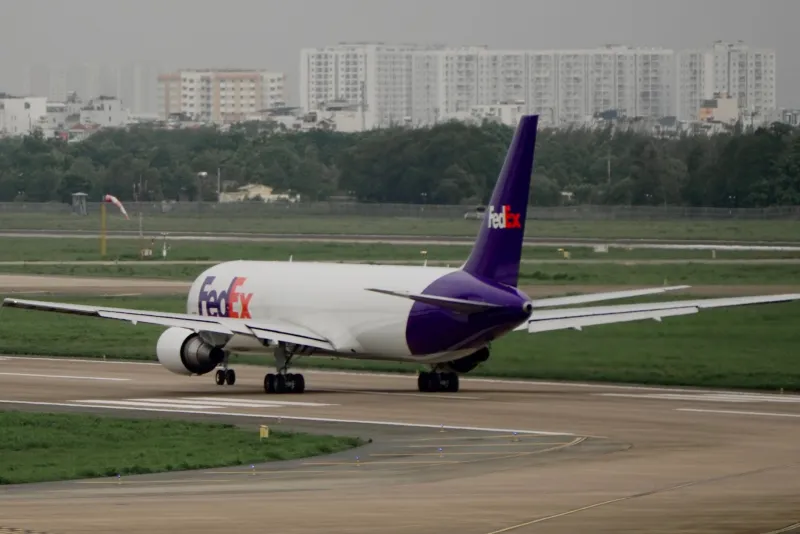
For supply chain managers sourcing goods from Vietnam, the fourth quarter is not a surprise. It arrives on schedule, every year, with the same consequences: tightened capacity, elevated rates, and a freight market that punishes anyone who waited too long to book. Yet despite the predictability of this seasonal squeeze, a significant number of US importers continue to approach Q4 as though it were an ordinary quarter with slightly higher volumes.
It is not. And treating it that way carries a measurable cost.
This guide maps the seasonal pressure points in Vietnam's air freight market, explains why capacity constraints hit harder here than in other sourcing regions, and offers a practical framework for planning around the crunch before it becomes a crisis.
Why Vietnam's Air Freight Market Is Especially Vulnerable to Seasonal Demand
Vietnam's air cargo infrastructure has expanded rapidly over the past decade, but it remains concentrated around a handful of primary gateways—most notably Noi Bai International Airport in Hanoi and Tan Son Nhat International Airport in Ho Chi Minh City. Unlike China, which has a broader network of cargo-capable airports and more diversified carrier options, Vietnam's export volumes funnel through a comparatively narrow set of routes.
This structural concentration means that when demand spikes—as it reliably does in the lead-up to the US holiday retail season—the market tightens quickly and with little slack to absorb overflow. Carriers that might add capacity incrementally in other markets have fewer options here, and the surge in demand from multiple industries competing for the same cargo holds creates a compounding effect.
Adding to this dynamic is Vietnam's manufacturing calendar. A large share of Vietnam's export base—electronics, apparel, footwear, furniture—is oriented toward US retail cycles. When American retailers begin placing replenishment orders in late summer and early fall, Vietnamese factories respond simultaneously, flooding the outbound freight market at the same moment.
The Monthly Pressure Map: August Through December
August is when the squeeze begins to form beneath the surface. Factories are operating at or near full capacity. Booking windows for September and October departures are shortening. Importers who have not yet secured space for Q4 shipments are already behind the curve, though rates have not yet spiked dramatically.
September marks the first visible tightening. Spot rates begin to climb. Carriers enforce stricter booking cutoffs, and last-minute capacity requests are increasingly difficult to fulfill. This is the month when importers relying on transactional freight relationships—booking as needed rather than under contract—begin to feel the disadvantage.
October is the peak of the crunch for importers targeting Black Friday and early holiday inventory windows. Demand from electronics and consumer goods sectors is at its highest. Cargo holds on direct Vietnam-US routes are frequently sold out weeks in advance. Rates can be 30 to 60 percent above mid-year benchmarks depending on the commodity and the routing.
November presents a paradox. While US consumer demand is at its seasonal high, importers who have not already moved their goods are largely out of options for on-time delivery. Those who planned ahead are executing against pre-booked capacity; those who did not are absorbing premium surcharges or delaying to January.
December is a transitional month. Post-holiday restocking demand eases the crunch somewhat, but the approach of Tet—Vietnam's Lunar New Year holiday, which typically falls in late January or early February—begins to introduce a new set of complications as factories wind down and labor availability tightens.
Why US Importers Consistently Underestimate the Squeeze
Several factors contribute to the recurring pattern of unpreparedness among US buyers.
First, many importers manage their Vietnam freight through domestic freight forwarders who lack direct visibility into origin-side capacity dynamics. By the time the constraint is communicated up the chain, the optimal booking window has often passed.
Second, the instinct to delay commitment—waiting to confirm final order quantities before booking space—works against importers in a market where early commitment is rewarded with both availability and rate stability.
Third, there is a tendency to benchmark Vietnam freight costs against prior-year actuals rather than forward market indicators. In a seasonal market, historical averages are poor predictors of peak-period pricing.
A Strategic Playbook for Planning Ahead
Lock in capacity before August. For Q4 shipments, meaningful advance booking means securing space by July at the latest. This requires coordinating production timelines with factory partners and accepting some degree of volume uncertainty in exchange for rate and availability certainty.
Negotiate annual volume agreements rather than spot bookings. Importers with consistent Vietnam freight volumes are better positioned to negotiate capacity commitments with carriers or consolidators on a forward basis. These agreements typically include rate caps or priority allocation provisions that provide insulation during peak periods.
Build alternative routing into your contingency plan. Secondary Vietnamese airports—including Da Nang International—offer relief valve options when primary gateways are saturated. Routing through regional hubs in Bangkok or Singapore can also provide access to additional transshipment capacity, though transit times will extend accordingly.
Separate production schedules from departure schedules. Cross-docking and local staging arrangements at Vietnamese logistics hubs allow importers to decouple factory readiness from freight departure. Goods can be consolidated and held at a warehouse near the airport, ready to load against a pre-booked cargo hold without waiting for an entire order to be production-complete.
Model the cost of delay explicitly. The decision to wait for a lower rate or a better booking window should be weighed against the quantified cost of late delivery—including lost sales, expedited domestic distribution costs, and any contractual penalties with retail partners. In most cases, the math favors early commitment.
The Cost of Predictability
There is a certain irony in the fact that the Vietnam air freight crunch is one of the most predictable disruptions in global supply chain management—and yet it claims a fresh set of victims every year. The importers who manage it successfully are not those with larger freight budgets or better luck. They are those who treat the seasonal calendar as a planning input rather than an afterthought.
At FPT MultiAir, we work with US importers year-round to build freight strategies that account for seasonal market dynamics before they become emergencies. The Q4 crunch is coming. The only question is whether your supply chain is ready for it.