Multimodal Shipping from Vietnam Looks Simple on Paper—Here's Why It Rarely Is in Practice
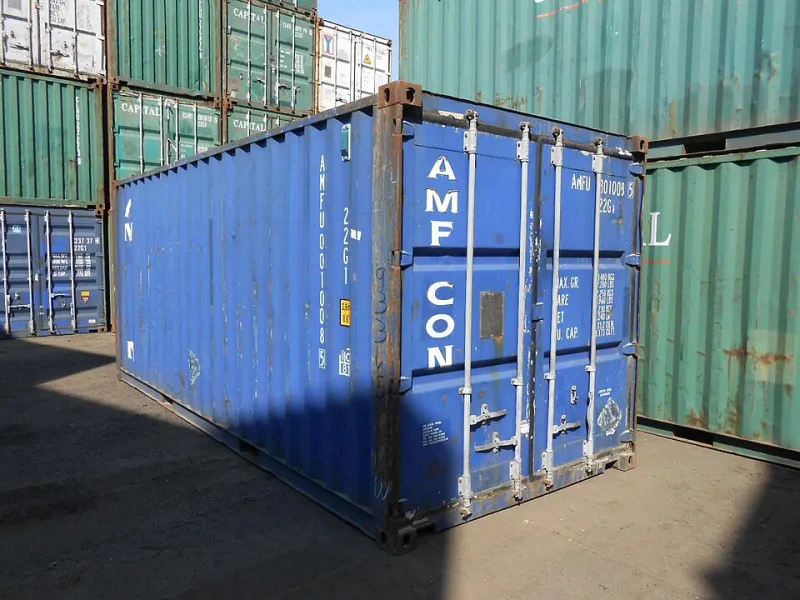
Photo: IPLManagement, CC BY-SA 4.0, via Wikimedia Commons
There is a version of the multimodal freight pitch that sounds almost too reasonable to question. Ship your high-value, time-sensitive goods by air. Move your bulk, low-urgency inventory by ocean. Split the difference, optimize your costs, and arrive at some ideal middle ground between speed and affordability. For US importers sourcing from Vietnam, this narrative has become increasingly popular as air freight rates have climbed and ocean transit times have stabilized.
The problem is that the pitch rarely accounts for what happens between the two modes. And in logistics, what happens between things is almost always where the real costs live.
The Coordination Gap Nobody Budgets For
When a US importer decides to run parallel air and ocean shipments out of Vietnam, they are not simply choosing two transport options. They are choosing two entirely separate operational tracks—each with its own documentation requirements, carrier relationships, customs protocols, and delivery timelines. Managing those tracks in isolation is manageable. Managing them as a single, synchronized supply chain strategy is something else entirely.
Consider a scenario that plays out regularly for mid-sized importers: a company decides to air freight its fast-moving SKUs from a factory in Binh Duong Province while sending the rest by ocean from Cat Lai port. On paper, the split makes sense. In practice, the air shipment arrives at Los Angeles International Airport nearly three weeks before the ocean container clears customs at the Port of Long Beach. The warehouse receiving the air freight now needs to hold partial inventory—inventory that is technically ready for distribution but cannot be packaged or kitted without the components still floating somewhere in the Pacific.
The carrying costs associated with that wait, combined with the labor required to manage a split receiving process, can quietly consume a significant portion of the savings the multimodal approach was meant to generate.
Handoff Costs Are Real and Frequently Underestimated
Every point at which cargo changes hands—from factory floor to domestic trucking, from trucking to airport or port, from origin country to destination country, from port to inland distribution—carries a cost. In a single-mode shipment, those handoffs follow a predictable sequence that experienced freight forwarders can manage efficiently. In a multimodal strategy, the number of handoffs multiplies, and so does the opportunity for misalignment.
In Vietnam specifically, the logistics infrastructure between manufacturing hubs and major freight gateways like Tan Son Nhat International Airport and Cat Lai port involves a network of domestic carriers, warehouse operators, and customs brokers who do not always communicate across modal boundaries. An air freight forwarder and an ocean freight forwarder working for the same US importer may have no operational overlap whatsoever. Coordinating their activities—ensuring that documentation is consistent, that cargo classifications align, that export declarations do not create conflicting records—requires active management that most importers underestimate when building their initial cost models.
Inventory Timing Is the Hidden Variable
Perhaps the most underappreciated challenge in multimodal logistics from Vietnam is the effect on inventory planning. The entire value proposition of splitting shipments by mode rests on the assumption that the goods traveling by each mode serve different functions in the supply chain—and that their arrival timelines can be managed independently without disrupting downstream operations.
That assumption breaks down the moment those goods are interdependent. Electronic components and the devices they go into, garments and the accessories that complete them, furniture and the hardware required for assembly—in each of these cases, an air shipment arriving weeks ahead of its ocean counterpart creates a holding pattern that costs money without generating value.
US importers who have successfully navigated this challenge typically invest heavily in demand forecasting and SKU-level analysis before committing to a multimodal strategy. They identify, with precision, which products can genuinely be decoupled from the rest of their inventory and managed on independent timelines. That analysis is not a one-time exercise—it requires ongoing review as product mixes change and customer expectations shift.
When a Single Mode Is Actually the Smarter Call
There are circumstances in which the operational overhead of multimodal logistics simply outweighs the potential savings, and experienced supply chain managers recognize those circumstances before committing to a split strategy.
For importers with tight production cycles, limited warehouse flexibility, or highly interdependent product lines, the administrative burden of managing two parallel logistics tracks—plus the risk of timing misalignment—can make a single-mode approach more cost-effective in total terms, even if the per-unit freight cost is higher. The math changes significantly when you factor in the labor hours required to coordinate dual-mode documentation, the warehouse costs associated with holding partial inventory, and the customer service exposure created by unpredictable split-delivery timelines.
Ocean freight from Vietnam to major US West Coast ports has become increasingly reliable in terms of transit predictability, particularly for importers who book with established carriers and maintain strong relationships with their Vietnamese freight partners. For many product categories, the gap between ocean and air lead times can be bridged with smarter inventory positioning rather than more expensive transport.
Making Multimodal Work Requires Infrastructure, Not Just Intent
None of this is an argument against multimodal logistics. When it is designed and executed properly, a blended air-ocean strategy from Vietnam can deliver genuine competitive advantages—faster replenishment cycles for high-velocity SKUs, lower total freight spend across a diversified product portfolio, and greater resilience against disruptions that affect a single mode.
But those advantages do not emerge automatically from the decision to split shipments. They emerge from the operational infrastructure built around that decision: integrated freight management systems that track air and ocean cargo on a single dashboard, logistics partners in Vietnam who communicate across modal boundaries, customs brokers who understand the documentation requirements of both modes, and internal teams who can respond quickly when timelines diverge.
US importers who approach multimodal logistics as a planning discipline—rather than a cost-cutting shortcut—are the ones who ultimately extract value from it. Those who treat it as a simple optimization exercise tend to discover its complexity at the worst possible moment: when a shipment is already in transit and the coordination gaps have already opened.
At FPT MultiAir, we work with US importers at every stage of the multimodal planning process, from initial feasibility analysis to real-time shipment coordination across Vietnam's major freight corridors. The goal is never to make logistics look simpler than it is. The goal is to build the systems that make complexity manageable.