What's Actually Behind That 40% Air Freight Rate Increase from Vietnam: A Line-by-Line Breakdown

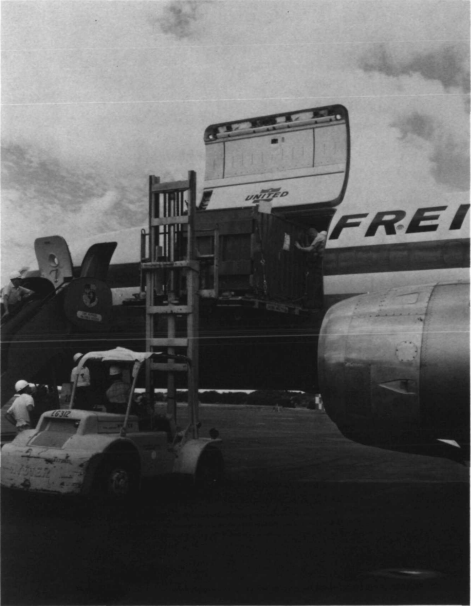
Photo: NASA/William R. Corliss, Public domain, via Wikimedia Commons
The Quote That Surprised No One—Except the Buyer
A mid-sized US electronics importer places a routine air freight order from its Vietnamese contract manufacturer in Ho Chi Minh City. The shipment is roughly the same weight and dimensions as the previous quarter's order. The goods are identical. The route hasn't changed. And yet the quote comes back 40% higher than three months ago.
This scenario is not hypothetical. It plays out regularly across industries sourcing from Vietnam—apparel, electronics, industrial components, consumer goods. The instinct is often to blame the freight forwarder. Sometimes that instinct is correct. More often, the increase reflects a convergence of structural pricing variables that are poorly understood by importers who don't live inside the logistics industry.
Breaking down that 40% increase requires looking at each component of an air freight quote individually—because the surcharges are not monolithic. They come from different sources, move at different intervals, and respond to entirely different market conditions.
The Base Rate Is Just the Starting Point
When a freight forwarder provides a quote, the figure that tends to dominate the conversation is the base rate—expressed as a cost per kilogram on a specific lane, such as SGN (Tan Son Nhat International) to LAX or ORD. This rate is negotiated between airlines and freight forwarders based on contracted capacity and current demand.
Base rates from Vietnam to the US West Coast have historically ranged from roughly $3.50 to $6.00 per kilogram during stable periods. During demand surges—peak holiday shipping, factory reopening cycles after Tet, or supply chain disruptions elsewhere in Asia—those rates can climb well above $8.00 per kilogram on spot bookings.
If your forwarder locked in capacity under a long-term contract and your competitor is booking spot, you may be paying very different prices for the same lane on the same day. When contracts expire and forwarders renegotiate, that delta can appear suddenly in your next quote.
Fuel Surcharges: The Invisible Multiplier
Fuel surcharges are recalculated monthly by most major carriers, and they are applied on top of the base rate. These charges are typically expressed as a rate per kilogram and fluctuate with jet fuel index prices. A shift of even $0.30 per kilogram in the fuel surcharge, applied across a 500-kilogram shipment, adds $150 before any other variable moves.
Over a quarter in which fuel prices climb significantly—as they did during several periods tied to geopolitical instability and refinery constraints—the compounded effect on a regular importer's freight spend can be substantial. Importers who review their quotes infrequently may not notice the gradual escalation until a quarterly comparison reveals a dramatic total.
The important distinction here is that fuel surcharges are publicly disclosed by carriers and verifiable. A reputable freight forwarder will provide documentation. If a quote includes a fuel surcharge percentage but no reference to the applicable carrier index, that is a reasonable point to question.
Seasonal Demand and the Vietnam-Specific Calendar
Vietnam's manufacturing and export calendar creates demand patterns that differ from those in China or other Southeast Asian sourcing hubs. The Tet holiday—the Vietnamese Lunar New Year, typically falling in late January or early February—triggers a pre-holiday production rush followed by a factory slowdown that can last two to three weeks.
US importers who need goods before Q2 often find themselves competing aggressively for cargo space in the December-through-January window. Aircraft capacity on Vietnam-US routes is finite, and when demand spikes, rates follow. Similarly, the back-to-school and holiday retail seasons create late-Q2 and Q3 demand surges that affect pricing well before goods need to arrive in US warehouses.
If your quote jumped in a quarter that coincided with either a Vietnamese production cycle or a US retail demand peak, seasonal pressure is likely contributing to a meaningful portion of that increase.
Aircraft Availability and Belly Cargo Dynamics
Vietnam-to-US air freight moves primarily on a combination of dedicated freighter aircraft and belly cargo space on passenger flights. The balance between these two sources of capacity matters considerably to pricing.
When passenger routes are fully operational and airlines are flying at high load factors, belly cargo space is abundant and tends to moderate rates. When passenger demand drops—or when airlines redeploy aircraft to higher-revenue routes—belly capacity tightens and rates on freighter-dependent lanes rise.
Dedicated freighter availability is a separate constraint. If a major cargo carrier reduces frequency on the Vietnam-US corridor, or if aircraft are diverted to support demand in other markets, the remaining capacity commands a premium. These shifts are not always publicized, but their effect appears immediately in spot rate quotes.
Currency Fluctuations and the USD/VND Dynamic
While most international air freight is quoted in US dollars, the underlying cost structures of Vietnamese logistics providers, ground handlers, and customs agents involve Vietnamese dong. When the dong weakens against the dollar, Vietnamese-side costs appear cheaper in USD terms. When it strengthens, or when dollar-denominated costs rise in Vietnam due to imported inputs, local charges can increase.
Additionally, some freight forwarders operating in Vietnam price their services in dong and convert to USD at the time of invoicing. Depending on the exchange rate used—and whether it reflects the mid-market rate or includes a margin—currency handling can add to the apparent cost of a shipment in ways that are not immediately obvious.
Spotting Margin Padding Versus Legitimate Rate Increases
Not every rate increase is structurally justified. Freight forwarders operate businesses and manage their own margin pressures. In a rising-rate environment, some forwarders use market volatility as cover to improve their margins beyond what underlying cost increases warrant.
The practical way to distinguish legitimate increases from margin expansion is to request an itemized quote that separates the base rate, fuel surcharge, security surcharge, terminal handling charges, and any additional fees. Compare each line item against the previous quarter's invoice. If the base rate and fuel surcharge have increased in line with published carrier indices but the handling fees and miscellaneous charges have also grown without explanation, those are the figures to question.
Soliciting quotes from two or three freight forwarders on the same lane and shipment specifications is the most effective market check available to importers. Rate transparency improves when forwarders know they are competing.
Building a More Stable Freight Budget
For US importers with consistent Vietnam sourcing volumes, the most reliable protection against quarterly rate surprises is contracted capacity. Long-term agreements with freight forwarders or direct carrier relationships lock in base rates while still allowing for documented, index-linked surcharge adjustments.
Understanding the Vietnam-US air freight market as a dynamic system—rather than a fixed-cost line item—is the first step toward managing it effectively. The 40% increase that appears without warning almost always has a traceable explanation. The goal is to develop the tools and relationships to trace it before it reaches the invoice.