Air, Ocean, or Rail from Vietnam? A Decision Framework US Importers Can Actually Use

Photo by Photo by Helmar Baechle on Unsplash on Unsplash
Every US importer sourcing from Vietnam eventually faces the same question: how do I get this product to my customer at the right cost, on the right timeline, without gambling the quarter on a single logistics decision? The honest answer is that no single transport mode is universally correct. The right answer depends on your product, your margin, your customer commitments, and—critically—where you are in your demand cycle.
What follows is a structured approach to making that call before the shipment is already at the factory gate.
Start With What Your Margin Can Actually Absorb
Before evaluating transit times or carrier options, run a simple margin stress test. Take your landed cost target for the product and subtract your current all-in ocean freight cost. That gap is your maximum tolerable freight premium. If air freight costs you four to six times what ocean does—and for Vietnam-to-US lanes, that differential is common—you need to know whether your product's margin can absorb that difference before a deadline forces your hand.
For high-value electronics, medical devices, or fashion goods with short selling windows, the math often favors air even at peak rates. For furniture, industrial components, or commoditized consumer goods, ocean almost always wins on cost—provided lead times are built into the production calendar.
The mistake most importers make is not running this calculation until they're already in a crunch. By then, air freight is no longer a choice—it's an emergency tax.
The Three-Variable Decision Matrix
When evaluating transport mode from Vietnam, three variables should drive the analysis: time sensitivity, cargo value density, and volume predictability.
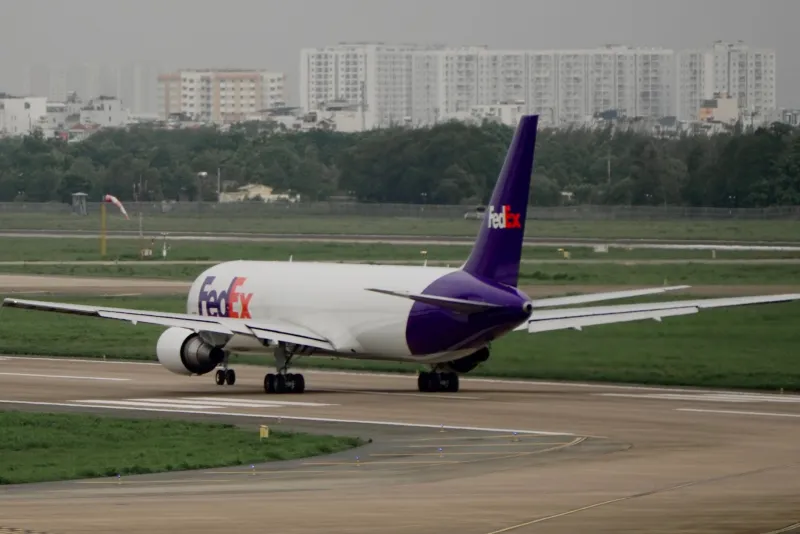
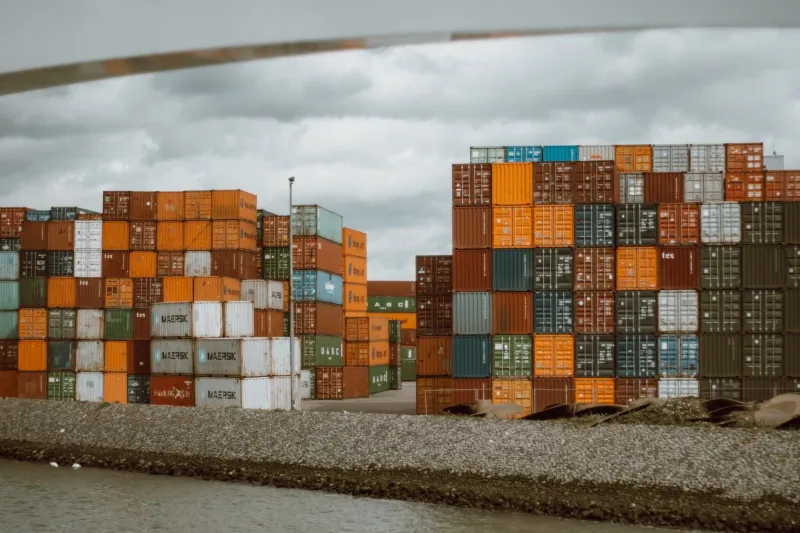
Time sensitivity is straightforward. Air freight from Vietnam to major US ports typically runs seven to ten days door-to-door. Ocean freight on the same lane averages twenty-five to thirty-five days depending on the routing and transhipment points. Rail-ocean multimodal combinations—moving goods by rail through southern China before connecting to ocean services—can land somewhere in between, though with additional complexity at border crossings.
Cargo value density matters because freight costs are calculated either by weight or by volume, whichever yields higher revenue for the carrier. High-value, compact goods—think semiconductors, precision instruments, or luxury accessories—generate favorable economics for air freight. Bulky, low-value goods, such as plastic housewares or raw textiles, generate unfavorable air economics almost by definition.
Volume predictability is where many importers underestimate their own risk. If your demand is seasonal or tied to promotional calendars, committing exclusively to ocean freight can leave you scrambling for emergency air capacity in Q4, when Vietnam-to-US air rates historically spike and belly capacity on passenger aircraft tightens. Conversely, if your volumes are steady and your lead times are generous, ocean freight offers cost advantages that compound over a full fiscal year.
Real Cost Scenarios Worth Examining
Consider a mid-sized US apparel importer bringing in 2,000 units of a seasonal collection from Ho Chi Minh City. At standard ocean freight rates, the per-unit freight cost might run between $1.20 and $2.00 depending on container utilization. At air freight rates during a non-peak period, that same unit cost could reach $8 to $12. During Q4 peak, air rates can push that figure to $15 or higher.
If the collection sells at a 60% gross margin and a missed selling window costs the company 30% of its revenue on those units through markdowns, the calculus changes. In that scenario, air freight at $12 per unit may be cheaper than the revenue destruction caused by a late ocean shipment.
Now consider an industrial components importer moving standardized parts with a 90-day replenishment cycle. Ocean freight is not just viable—it is the only economically rational choice. The inventory buffer absorbs transit time, and the cost savings over a year of regular shipments can fund meaningful investment elsewhere in the supply chain.
When Mixing Modes Mid-Year Makes Sense
The most sophisticated Vietnam-to-US supply chains do not commit rigidly to one mode for the full calendar year. They build a base of ocean freight for predictable, high-volume SKUs and reserve air freight capacity for two specific scenarios: demand spikes that outrun inventory projections, and supplier delays that compress the delivery window.
This approach requires one thing most importers do not have: a standing relationship with an air freight provider before the emergency occurs. Attempting to book air freight capacity at the last minute—particularly during Vietnam's manufacturing peak between August and November—means competing against dozens of other importers in the same position, paying surge premiums, and accepting whatever space is available rather than what is optimal.
Building a multimodal strategy means negotiating rates and capacity commitments across both ocean and air lanes in advance, then activating the appropriate option based on actual demand signals. It is a more complex arrangement to manage, but it consistently outperforms the single-mode default when demand is volatile.
The Rail Question
Rail-ocean combinations from Vietnam, typically routing through southern China to connect with trans-Pacific ocean services, are worth considering for importers who need faster transit than standard ocean but cannot justify air freight economics. These routes have matured meaningfully in recent years and offer a legitimate middle-ground option for certain cargo profiles.
The tradeoffs are real, however. Rail introduces additional border crossing complexity, adds potential delay points at interchange facilities, and requires logistics partners with genuine operational experience on those corridors—not just theoretical familiarity. For US importers evaluating this option, the key question is whether your logistics provider has moved actual freight on the specific rail segment you are considering, and what their documented delay rate looks like.
Making the Call
The right transport mode from Vietnam is the one that fits your margin structure, your customer commitments, and your demand reality—not the one that feels fastest or looks cheapest on a single invoice. Build the decision framework before the shipment is urgent. Run the margin stress test before the season starts. And establish logistics relationships across multiple modes before you need them.
The importers who consistently make the right call are not the ones with the best instincts. They are the ones who built the decision process before the pressure arrived.