Beyond Ho Chi Minh City: Building a Multi-Airport Air Freight Strategy Across Vietnam's Export Gateways
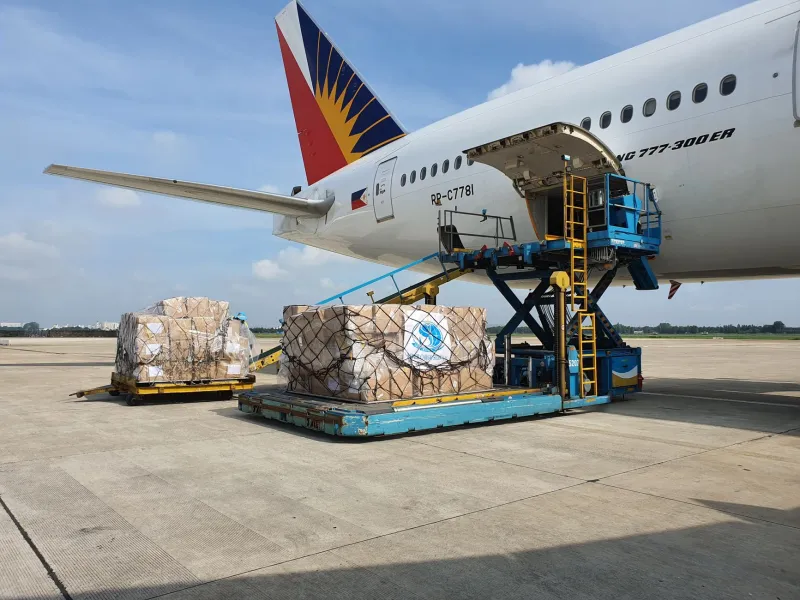
For most of the past decade, the default assumption in Vietnam-to-US air freight was straightforward: cargo originates in the south, consolidates in Ho Chi Minh City, and departs through Tan Son Nhat International Airport. The infrastructure was there, the carrier relationships were established, and the alternatives were, for most shippers, more theoretical than practical.
That assumption is under increasing pressure. Tan Son Nhat is operating at or near its structural capacity limits, capacity constraints during peak periods are translating directly into rate spikes and departure delays, and—critically—Vietnam's manufacturing geography has been shifting northward and toward central regions in ways that make a Ho Chi Minh City-centric routing strategy increasingly inefficient for a meaningful segment of US importers.
The question is no longer whether regional airports deserve consideration. It is how to evaluate them rigorously and integrate them into a coherent multi-airport strategy.
The Case for Diversification
Supply chain resilience, as a concept, has received substantial attention since the disruptions of the early 2020s. In the context of Vietnam air freight, resilience has a specific operational meaning: the ability to maintain cargo flow when one gateway is constrained without absorbing the full cost of that constraint.
Tan Son Nhat's capacity limitations are structural, not cyclical. The airport's single runway configuration and terminal infrastructure were not designed for the cargo volumes that Vietnam's manufacturing expansion has generated. Expansion projects are in progress, but infrastructure development timelines in this context are measured in years, not quarters.
For a US importer shipping consistently from Vietnam, a single-airport dependency means that every capacity crunch at Tan Son Nhat is your problem, regardless of where your specific cargo originates within the country. Distributing volume across multiple gateways converts that systemic risk into a manageable routing decision.
Da Nang International Airport: The Central Vietnam Option
Da Nang International Airport has developed meaningfully as an air cargo gateway over the past several years, driven in part by the growth of industrial zones in Quang Nam Province and the broader central Vietnam manufacturing corridor.
In terms of infrastructure, Da Nang handles both passenger belly cargo and dedicated freighter operations, with cargo terminal capacity that, while more limited than Tan Son Nhat, is substantially less congested. For shippers whose goods originate in central Vietnam—electronics components, apparel, and certain industrial goods categories are well represented in this region—routing through Da Nang can eliminate the inland trucking leg to Ho Chi Minh City entirely, reducing both transit time and domestic freight cost.
From a customs processing standpoint, Da Nang's export customs operations are generally regarded as efficient and predictable, with lower examination rates than the higher-volume southern gateway. This is not a guaranteed advantage, but it is a consistent pattern that experienced logistics operators in the region have observed.
The primary limitation at Da Nang is carrier selection. Direct services to major US gateway airports are limited, and most cargo moving through Da Nang will transit through a hub—typically in Northeast Asia—before reaching US destinations. This adds transit time and introduces a connection risk that must be factored into delivery commitments.
Noi Bai and the Hai Phong Gateway: Northern Vietnam's Emerging Freight Infrastructure
Northern Vietnam's manufacturing expansion—anchored by the provinces surrounding Hanoi and the Hai Phong port complex—has created significant demand for air freight capacity that Noi Bai International Airport in Hanoi is increasingly positioned to serve.
Noi Bai is Vietnam's second-largest airport by cargo volume and has seen substantial investment in cargo handling infrastructure. For US importers sourcing from suppliers in Hanoi, Bac Ninh, Bac Giang, and the broader Red River Delta industrial zone, Noi Bai represents a genuinely competitive alternative to routing cargo south to Tan Son Nhat.
The inland logistics from northern manufacturing clusters to Noi Bai are well-developed, with trucking networks that are more direct and less congested than the equivalent journey to Ho Chi Minh City. This matters for time-sensitive shipments: a cargo-ready date that triggers a same-day booking at Noi Bai is operationally achievable in a way that a same-day booking at Tan Son Nhat, with a full day's trucking from the north, is not.
Hai Phong itself, while primarily a seaport, is connected to this northern air freight ecosystem through its logistics infrastructure. For multimodal strategies that combine sea and air, the Hai Phong-Noi Bai corridor offers flexibility that the southern equivalent—Ho Chi Minh City port to Tan Son Nhat—does not, simply because the distances and road infrastructure are more manageable.
Carrier coverage at Noi Bai has expanded, with several major cargo carriers now operating or increasing frequencies on the route. Direct services to US destinations remain limited relative to Tan Son Nhat, but the hub connectivity through Asian gateway airports is comparable.
Evaluating the Cost-Benefit Tradeoff
A multi-airport strategy is not inherently cheaper than a single-gateway approach. The relevant question is not whether regional airports offer lower rates—they sometimes do and sometimes do not—but whether the total cost and risk profile of a distributed strategy is superior to the concentrated alternative.
Factors to evaluate include:
Inland freight savings. For cargo originating more than four hours by road from Ho Chi Minh City, the domestic trucking cost to Tan Son Nhat can be substantial. Routing through a closer gateway can offset higher air rates or longer transit times.
Schedule reliability. If Tan Son Nhat congestion is causing consistent departure delays that are disrupting your delivery commitments, the cost of those delays—in expediting fees, customer penalties, or lost sales—may exceed any rate premium at a regional gateway.
Carrier relationship leverage. Concentrating all volume at a single airport means concentrating all of your leverage with carriers at that airport. Distributing volume creates competitive pressure across carriers and gateways that can improve negotiating outcomes on both routes.
Operational complexity. Managing relationships with multiple airports, customs brokers, and trucking vendors adds administrative overhead. For smaller importers, this complexity may not be justified. For mid-market and enterprise shippers with dedicated logistics teams, it is manageable and often worth the investment.
Building the Strategy in Practice
For US importers ready to move from a single-gateway model to a multi-airport approach, the practical steps begin with supply chain mapping. Identify where your Vietnamese suppliers are actually located—not just their registered addresses, but their production facilities—and calculate the realistic inland distance to each potential gateway.
From there, request comparative quotes on a consistent lane basis: same cargo type, same weight, same destination, routed through each gateway option. Track these quotes over multiple months to build a picture of relative rate stability and seasonal divergence.
Engage a freight forwarder with active operations at each gateway you are considering. A forwarder with strong relationships only at Tan Son Nhat will not give you unbiased guidance on Da Nang or Noi Bai routing. The quality of local agent relationships at regional airports is a significant determinant of execution quality.
Finally, pilot the regional gateway with a subset of shipments before committing volume. This gives your team operational experience with customs processing times, carrier performance, and final-mile connectivity without creating dependency before you have validated the option.
The Strategic Perspective
Vietnam's air freight infrastructure is not static. As manufacturing investment continues to flow into the country and as regional airport development accelerates, the relative advantages of each gateway will continue to shift. The importers who are building multi-airport familiarity now will be better positioned to exploit those shifts as they occur.
At FPT MultiAir, our network spans Vietnam's primary and regional air freight gateways. Helping US importers navigate the tradeoffs across those gateways—not just optimizing for today's routing but building flexibility for tomorrow's supply chain—is central to what we do.