Rate Spikes Don't Have to Be Surprises: Planning Your Vietnam Air Freight Budget Around 2025 Peak Season
The Pattern Is Predictable. The Preparation Often Isn't.
For procurement teams and supply chain managers sourcing goods from Vietnam, peak season air freight premiums are not a new phenomenon. They arrive on roughly the same schedule every year, tied to the same commercial triggers: the pre-holiday manufacturing push, Lunar New Year factory closures, back-to-school inventory builds, and the post-tariff announcement scramble that has become an increasingly familiar feature of the US-Vietnam trade corridor.
What continues to surprise many US importers is not that rates spike — it is how steeply and how quickly they can do so. A lane that costs a manageable rate per kilogram in early Q2 can look dramatically different by August or September. For businesses operating on thin margins or locked into fixed retail pricing, that difference rarely shows up anywhere except the bottom line.
The 2025 peak season is already taking shape. Demand signals from Vietnamese manufacturing hubs — particularly in electronics, apparel, footwear, and furniture — suggest a robust export cycle is underway. US importers who have not yet reviewed their freight commitments for the second half of the year are running out of runway to act.
How Carriers Allocate Capacity — And Why It Matters to You
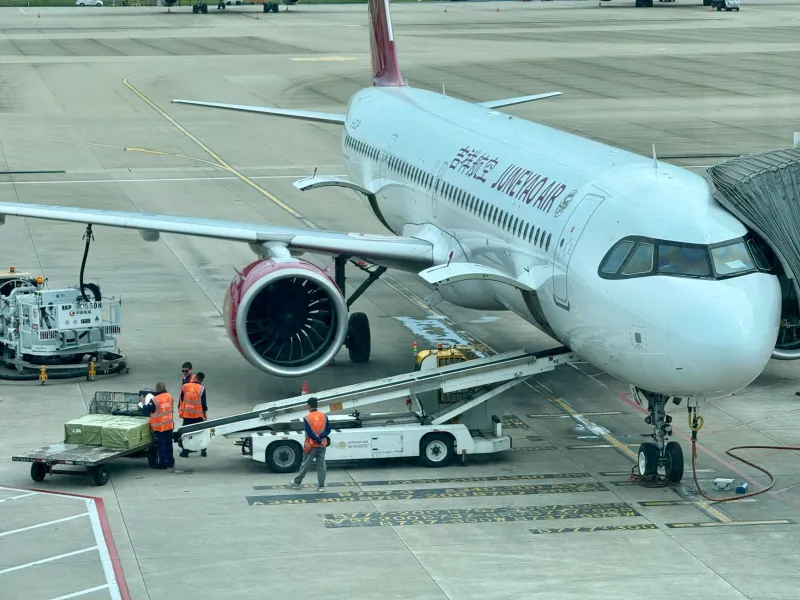
Understanding air freight pricing during peak periods requires a working knowledge of how airlines and freight carriers manage their capacity. Commercial aircraft flying routes between Vietnam's major airports and US gateway cities carry both passenger baggage and belly cargo. When passenger demand climbs — as it does seasonally — available cargo space contracts. Dedicated freighter capacity, while less subject to this constraint, is finite and heavily pre-booked by large shippers and freight forwarders operating on long-term agreements.
Carriers typically begin allocating peak season capacity commitments anywhere from three to five months in advance. By the time spot market demand spikes in August or September, the most competitive rates on well-served routes have already been claimed. Importers who wait until they receive a production-complete notification from their Vietnamese supplier before booking freight are, in most cases, competing for whatever capacity remains — at whatever price the market will bear at that moment.
This dynamic is particularly acute on lanes connecting Ho Chi Minh City and Hanoi to major US hubs such as Los Angeles, Chicago O'Hare, and JFK. These are among the most commercially active routes in Southeast Asia, and capacity fills fast when multiple industries hit their peak cycles simultaneously.
Reading the Demand Signals Before the Market Does
Sophisticated importers do not wait for rate increases to tell them the market has tightened. They watch the upstream indicators.
Vietnamese factory order books are one of the clearest leading signals available. When manufacturers in industrial zones around Binh Duong, Dong Nai, and the northern corridors near Hanoi report full production schedules three to four months out, air freight demand from those regions will follow. Industry associations, export data releases from Vietnam's General Statistics Office, and shipping index trackers all provide publicly accessible data that can inform a company's freight planning calendar.
US retail and distribution cycles are the other side of the equation. If your customers are stocking shelves for Q4, your goods need to clear US customs in September at the latest for most product categories. Working backward from that date — accounting for production lead times, inland transport to the airport in Vietnam, customs clearance on both ends, and domestic US distribution — quickly reveals how little margin for delay actually exists. Air freight is often chosen precisely because it compresses that timeline. But it only works as a buffer if it is booked when capacity is still available.
Negotiation Strategies That Hold Up Under Pressure
Locking in favorable air freight rates before peak season is not simply a matter of calling your forwarder earlier than usual. It requires a structured approach to carrier and forwarder relationships that gives you meaningful leverage at the negotiating table.
Volume commitment agreements remain one of the most effective tools available to mid-size and large importers. Carriers and forwarders are willing to offer rate stability in exchange for predictable volume. If your annual Vietnam air freight spend is substantial, a quarterly or semi-annual volume commitment — even at a modest minimum — can protect your cost structure during the months when spot rates are most volatile.
Multi-route flexibility is another underutilized negotiating asset. Importers who can accept routing through alternative Vietnamese airports, or who can accept connections through regional hubs in Asia, give their logistics partners more options to fulfill the commitment at competitive cost. That flexibility translates into better pricing.
Staggered shipment scheduling, where production timelines allow, reduces the concentration of freight demand in a single high-cost window. Rather than consolidating all Q3 inventory into a single August air shipment, spreading production releases across June, July, and early August can meaningfully lower the average cost per kilogram across the season.
Finally, early engagement with your freight provider's yield management team — rather than simply the account manager — can surface capacity that has not yet been committed. Carriers hold back a portion of peak capacity for key accounts. If your forwarder has that relationship and you have communicated your volume intentions clearly and early, you stand a better chance of accessing that reserved space.
What 2025 Adds to the Equation
Beyond the standard seasonal pressures, 2025 brings additional variables that US importers should factor into their freight planning. The ongoing reconfiguration of global supply chains — with Vietnam continuing to absorb manufacturing volume that was previously concentrated in other markets — means that air freight demand from Vietnam is structurally higher than it was three years ago. New capacity has entered the market, but it has not kept pace with demand growth on the most popular US-bound lanes.
Trade policy uncertainty remains a background variable. Any significant change in tariff schedules — whether driven by US legislative action or bilateral negotiations — can trigger sudden freight demand spikes as importers rush to move goods ahead of new measures taking effect. Building some scheduling buffer into your 2025 freight plan is not overcautious. It is prudent risk management.
Getting Ahead of the Curve
The importers who manage peak season air freight costs most effectively are not the ones who react fastest when rates spike. They are the ones who have already made their commitments, built their schedules, and established their carrier relationships by the time the rest of the market is scrambling.
For US businesses sourcing from Vietnam, the window to act on 2025 peak season planning is narrowing. Engaging with a logistics partner who understands the Vietnam-to-US corridor — its seasonal rhythms, its capacity constraints, and its negotiation dynamics — is the first step toward a freight budget that holds up when the market moves.
The rate spikes will come. The question is whether your supply chain is positioned to absorb them on your terms, or the market's.