One Order, Too Many Hands: The Real Price US Importers Pay for Splitting Vietnam Freight Across Carriers
The Logic That Looks Good on Paper
It is easy to understand the appeal. A US procurement team, managing sourcing relationships across three or four Vietnamese suppliers, decides to assign different freight providers to each factory. The reasoning is straightforward: distribute the risk, invite competition, and avoid over-reliance on any single logistics partner. On a spreadsheet, the math can appear to favor this arrangement. In practice, the costs accumulate in places that spreadsheets rarely capture.
Fragmented freight is one of the more persistent and underexamined sources of supply chain inefficiency among American companies importing from Vietnam. The problem is not visible in any single invoice. It surfaces across multiple touchpoints — in premium rates paid for undersized shipments, in consolidation opportunities missed by days or hours, in the administrative burden of reconciling cargo status across incompatible tracking systems, and in the delays that result when no single carrier holds accountability for the full shipment picture.
The Consolidation Window Problem
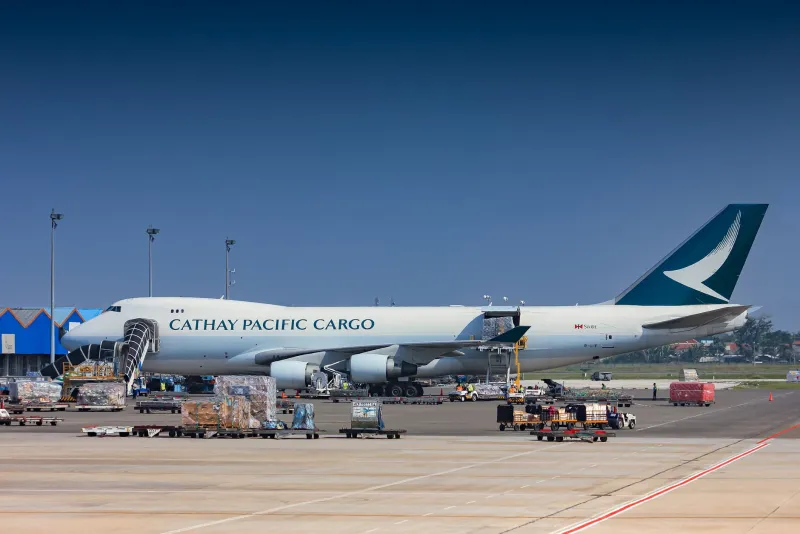
Vietnam's air freight market operates on tight capacity cycles, particularly out of major hubs such as Tan Son Nhat International Airport in Ho Chi Minh City and Noi Bai in Hanoi. Carriers build consolidated loads by aggregating cargo from multiple shippers to fill aircraft at commercially viable rates. When a US importer splits an order across two or three freight providers, each provider is working with a fraction of the total cargo volume — and each is competing for space on the same limited weekly flights.
The practical consequence is that smaller cargo parcels attract higher per-kilogram rates. Freight pricing in Vietnam, as in most air cargo markets, rewards volume. A shipper moving 500 kilograms through a single provider commands meaningfully better rates than two shippers each moving 250 kilograms through separate brokers. Beyond the rate differential, fragmented cargo misses the leverage that comes with consolidation: priority handling, preferred departure windows, and the ability to negotiate service level commitments.
When production timelines are already compressed — as they often are for seasonal goods or time-sensitive electronics — losing even one departure cycle can translate directly into missed delivery windows at the US end.
Billing Complexity as a Hidden Cost Center
Every additional freight provider in a supply chain introduces a new billing relationship, a new set of accessorial charges, and a new reconciliation cycle. US importers managing three or four carrier relationships out of Vietnam are not simply tripling their administrative workload — they are creating conditions in which billing errors go undetected longer, surcharges are applied inconsistently, and the true landed cost of any given shipment becomes difficult to calculate with precision.
Fuel surcharges, security fees, and terminal handling charges vary between providers and are not always disclosed with the same transparency. An importer receiving four separate invoices for what originated as a single production order may find that the cumulative cost exceeds what a unified carrier relationship would have charged — even before accounting for the staff time required to audit each document.
This is not a marginal inefficiency. For companies importing at scale, the administrative cost of fragmented freight can represent a meaningful line item that never appears on a logistics budget.
Tracking Fragmentation and the Visibility Gap
Modern supply chain management depends on real-time cargo visibility. US importers — particularly those operating in retail, consumer electronics, or healthcare — often face downstream obligations that require precise shipment tracking from origin to destination. Carrier-provided tracking systems, even the best of them, are designed to report on cargo within a single provider's network. They do not communicate with one another.
An importer using three different Vietnamese freight providers to move components from three different factories is effectively operating three separate visibility environments. Status updates arrive through different portals, in different formats, and on different schedules. When a delay occurs — a customs hold, a missed connection, a warehouse dwell issue — identifying which shipment is affected and coordinating a response across multiple provider contacts consumes time that a single point of contact would eliminate.
For US companies that have invested in transportation management systems or integrated supply chain platforms, this fragmentation creates data integrity problems. Shipments must be manually reconciled across systems, and exception management becomes reactive rather than proactive.
Accountability Without a Center
Perhaps the most consequential cost of splitting freight across multiple carriers is the diffusion of accountability it produces. When a consolidated shipment arrives short, late, or damaged, a single carrier relationship provides a defined escalation path. The provider is responsible for the cargo under its care, the documentation is unified, and the claims process — however imperfect — has a clear owner.
Fragmented freight arrangements blur these lines considerably. When cargo from multiple providers arrives at a US port-of-entry in incomplete condition, determining which provider bears responsibility for which portion of the loss requires cross-referencing multiple bills of lading, multiple insurance policies, and potentially multiple customs entries. The process is time-consuming, expensive, and rarely resolved in the importer's favor without significant effort.
This accountability gap is particularly acute when disruptions occur mid-transit — during typhoon season in the South China Sea, during Vietnamese national holidays when factory and freight operations run at reduced capacity, or during peak demand periods when cargo space becomes scarce and providers prioritize their highest-volume clients.
The Case for Strategic Carrier Consolidation
The alternative to fragmented freight is not simply choosing one provider and accepting whatever terms are offered. It is building a structured partnership with a freight operator that has the network depth, regional relationships, and operational infrastructure to manage consolidated cargo across multiple Vietnamese origins.
A capable logistics partner operating in Vietnam should be able to aggregate cargo from different factory locations into a single consolidated shipment, offer unified documentation and customs coordination, provide a single tracking interface for the entire order, and take defined accountability for performance from origin to destination.
For US importers, the financial case for this approach is straightforward. Consolidated volumes attract better rates. Unified billing reduces administrative overhead. Single-provider accountability shortens exception resolution cycles. And strategic carrier relationships — built over time and across multiple shipment cycles — create the mutual investment that produces preferential treatment when capacity is constrained.
Rethinking the Multi-Carrier Default
The instinct to diversify freight providers is not irrational. It reflects a genuine concern about over-dependence and a reasonable desire to maintain competitive tension in vendor relationships. But there is a meaningful difference between strategic diversification and operational fragmentation. The former involves maintaining backup carrier relationships and conducting periodic market comparisons. The latter involves dividing active shipments in ways that reduce volume leverage, complicate visibility, and distribute accountability so broadly that no single provider has sufficient stake in the outcome.
US importers who have consolidated their Vietnam freight operations consistently report improvements in rate predictability, transit time reliability, and the capacity to respond effectively when disruptions occur. The savings are rarely dramatic in any single shipment. Across a full fiscal year, however, the cumulative effect of reduced accessorial charges, eliminated reconciliation errors, and fewer missed consolidation windows adds up to a material improvement in supply chain economics.
Fragmentation may feel like flexibility. In Vietnam's freight environment, it more often functions as an avoidable cost.