What You Can't See Is What's Costing You: Supplier-Level Blind Spots in Vietnam Freight Operations
The Tracking Gap Nobody Talks About
There is a common assumption among US importers that freight visibility begins when a shipment is handed over to a carrier. A tracking number is issued, a booking confirmation arrives, and the clock starts. What this model ignores is everything that happens before that moment—and in Vietnam's complex, multi-tier supplier ecosystem, that upstream window is precisely where the most expensive problems take root.
Production delays, warehouse congestion at consolidation points, incomplete export documentation, and last-minute cargo repackaging are not rare exceptions. They are routine occurrences that, left undetected, cascade into emergency airfreight upgrades, missed retailer receiving windows, and penalty chargebacks that quietly erode margins quarter after quarter. For many US importers, this invisible upstream exposure functions as an unofficial logistics tax—one they pay repeatedly without ever diagnosing the source.
Where Shipments Actually Get Stuck
Vietnam's manufacturing base has expanded rapidly over the past decade, drawing production from a wide range of industries including electronics, apparel, furniture, and industrial components. This growth has been accompanied by increasing supply chain complexity. Many US buyers work with multiple Vietnamese suppliers whose facilities span Ho Chi Minh City's industrial zones, the northern manufacturing corridors around Hanoi and Haiphong, and emerging hubs in provinces like Binh Duong, Dong Nai, and Bac Ninh.
Within this geography, shipments frequently pass through several intermediate points before reaching an export gateway. Goods may be finished at a factory, transferred to a third-party warehouse for consolidation, inspected at a separate facility, and then transported to an airport or port. Each of these handoffs represents a potential delay point—and most of them are invisible to importers relying solely on carrier-issued tracking systems.
Common upstream bottlenecks include:
- Production completion delays that push cargo readiness past the booked cargo cutoff, requiring rebooking on a later—and often more expensive—flight
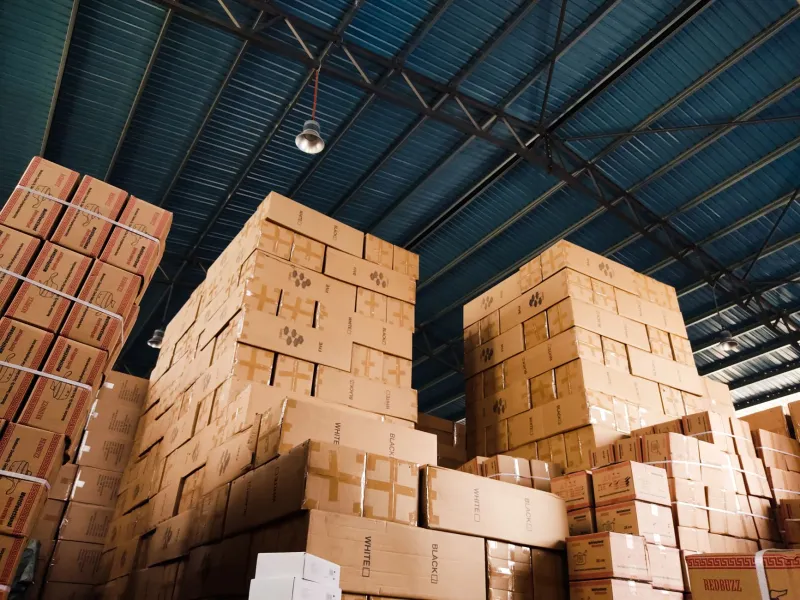
- Consolidation warehouse backlogs, particularly during peak export periods when shared facilities become overwhelmed with outbound cargo from multiple shippers
- Pre-export documentation gaps, including missing certificates of origin, incorrect commercial invoice values, or incomplete packing lists that stall customs clearance
- Cargo inspection queues at facilities conducting product quality checks or compliance reviews, which are rarely factored into freight booking lead times
Each of these issues is solvable—but only if identified early enough to allow for corrective action rather than emergency response.
The Real Cost of Late Detection
When a delay surfaces at the cargo terminal rather than at the supplier facility, the importer's options narrow considerably. Rebooking onto the next available flight may resolve the transit problem, but at a significant premium. Emergency airfreight surcharges on Vietnam-to-US corridors can add several dollars per kilogram to already elevated rates. For a mid-sized shipment of 500 kilograms, the difference between a planned booking and a last-minute one can easily reach four figures.
Beyond direct freight costs, late departures carry downstream consequences. US retailers operating on tight receiving windows—particularly those aligned with seasonal promotions or product launch calendars—may reject late deliveries outright or impose financial penalties. In some cases, missed windows result in goods being held in US warehouse facilities at additional cost, or rerouted to secondary distribution points that create further complexity.
The cumulative effect of these outcomes, repeated across multiple shipments throughout a fiscal year, constitutes what might reasonably be called a structural margin leak. It is not dramatic enough to trigger a formal investigation, but persistent enough to meaningfully affect profitability.
Building Visibility Before the Cargo Cutoff
Addressing upstream blind spots requires a deliberate shift in how importers define freight visibility. Rather than measuring performance from the point of carrier handover, leading importers are extending their monitoring frameworks back to the factory floor—and in some cases, back to raw material receipt.
Several operational practices have proven effective in closing this gap:
Supplier readiness check-ins tied to production milestones. Rather than waiting for a cargo ready notification, importers can establish structured communication checkpoints at key stages: production completion, quality inspection clearance, and warehouse transfer. These check-ins do not require sophisticated technology—a standardized reporting template shared via email or messaging platform is sufficient to surface issues days before they become crises.
Pre-export documentation audits. Customs clearance delays are among the most preventable causes of shipment disruption, yet they remain surprisingly common. A pre-export audit process—reviewing commercial invoices, packing lists, certificates of origin, and any commodity-specific compliance documents before cargo is tendered to the carrier—can identify discrepancies with enough lead time to correct them without affecting the flight schedule.
Local logistics partner integration. In Vietnam's more complex supply corridors, having a logistics partner with on-the-ground presence at consolidation points and export gateways provides a layer of real-time intelligence that remote monitoring cannot replicate. Local partners can flag warehouse backlogs, coordinate with customs brokers, and escalate issues through established channels before delays reach the importer's attention through official tracking systems.
Freight booking buffers aligned to actual lead times. Many importers book airfreight based on optimistic production timelines rather than verified cargo readiness dates. Building a modest buffer—even 24 to 48 hours—between expected production completion and cargo cutoff can absorb minor upstream delays without requiring rebooking.
Turning Visibility Into a Competitive Advantage
For US companies sourcing from Vietnam at scale, supplier-level visibility is not simply a risk management tool. It is an operational differentiator. Importers who can reliably predict cargo readiness dates, anticipate documentation requirements, and communicate accurate delivery timelines to their retail or distribution partners operate with a level of supply chain confidence that translates directly into stronger commercial relationships.
This is particularly relevant as US importers navigate an environment of elevated freight rates, tightening carrier capacity on key Vietnam-US corridors, and increasing retailer scrutiny of on-time delivery performance. In this context, the ability to act on upstream intelligence—rather than react to downstream surprises—represents a measurable advantage.
At FPT MultiAir, our approach to Vietnam freight management is built on the recognition that the most consequential moments in a shipment's journey often occur long before the cargo reaches the tarmac. By extending visibility protocols upstream and integrating proactive communication frameworks into our client operations, we help US importers convert an invisible logistics tax into a controlled, manageable cost structure.
The shipments that arrive on time, at planned cost, and with complete documentation are not the result of luck. They are the result of knowing what is happening inside the supply chain before anyone else does.