Dynamic Freight: How US Importers Are Using Real-Time Data to Move Between Air and Ocean Without Losing Ground
For years, the freight decision was made once per season. A US importer would sit down with a sourcing team, review forecasts, and commit to either air or ocean for a given product category. Ocean meant lower costs and longer waits. Air meant speed at a premium. The two rarely intersected within the same shipment cycle.
That model is breaking down — and the companies abandoning it are outperforming those that haven't.
Across industries from consumer electronics to apparel to industrial components, a growing cohort of US importers sourcing from Vietnam are building what supply chain professionals increasingly call a multi-modal freight posture: the operational capacity to move between air, ocean, and hybrid routing in near real time, guided by live demand data rather than static quarterly projections.
The results, where implemented well, are striking. Reduced reliance on emergency air freight. Leaner inventory buffers. Faster response to market shifts. And perhaps most importantly, a structural reduction in the cost-per-unit penalty that comes with reactive freight decisions.
Why Static Mode Commitments Fail in Volatile Demand Environments
The traditional freight planning model assumes that demand forecasts made sixty to ninety days out will be reasonably accurate by the time cargo is ready to ship. For many product categories, that assumption no longer holds.
Consider the position of a mid-sized US retailer importing seasonal home goods from manufacturing partners in Binh Duong province. A forecast built in January may reflect the best available data at the time — but by March, consumer sentiment, competitor promotions, or even weather patterns may have shifted the demand curve materially. If that retailer has already locked ocean bookings for April, it faces a painful choice: accept the delay and risk stockouts, or scramble for air freight capacity at peak-season rates.
This is not an edge case. It is a recurring pattern that costs US importers significant margin each year. The antidote is not better forecasting — forecasting will always carry uncertainty. The antidote is building a freight strategy that accommodates that uncertainty from the outset.
The Technology Layer Enabling Mode Flexibility
What has changed in recent years is the availability and affordability of supply chain visibility platforms capable of integrating demand signals directly into freight planning workflows.
Platforms such as project44, FourKites, and Flexport — among others — now offer US importers the ability to monitor inventory velocity, point-of-sale data, and inbound cargo status on a single dashboard. When those signals diverge from forecast, planners receive alerts that can trigger a freight mode review before a shipment has even left the origin warehouse in Vietnam.
The practical implication is significant. Rather than making a binary air-versus-ocean decision at the point of purchase order creation, importers using these tools can make provisional bookings across both modes and finalize routing closer to the cargo-ready date — when demand visibility is materially sharper.
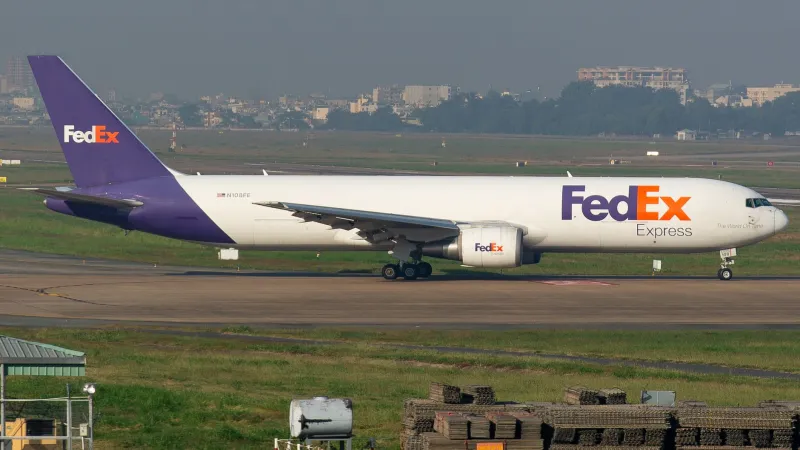
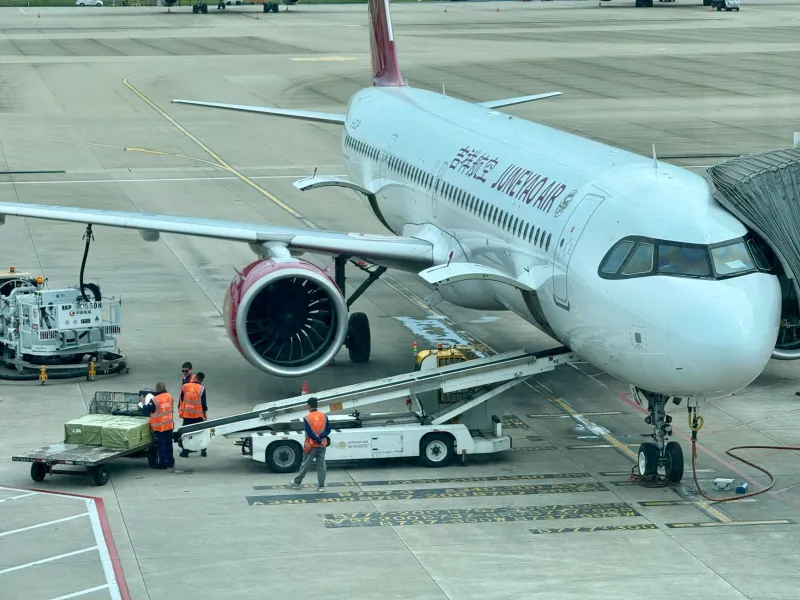
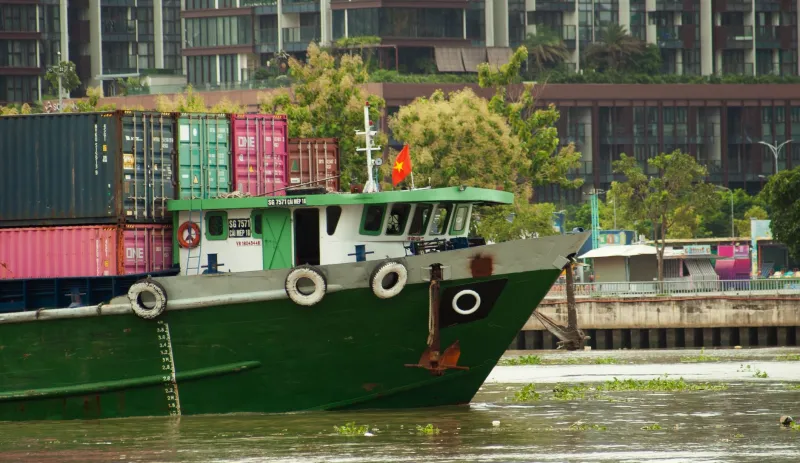
For shipments originating from Vietnam, where cargo-ready dates frequently shift due to production scheduling, this flexibility has compounding value. A container that was planned for ocean consolidation out of Cat Lai port can, if demand signals warrant, be rerouted to air freight through Tan Son Nhat or Noi Bai with sufficient lead time — provided the logistics partner on the ground has the capacity and relationships to execute that pivot.
Case Framework: Electronics Components Importer, Q4 Rebalancing
A useful illustration comes from the experience of a US technology accessories company importing from a supplier cluster in the Hanoi industrial corridor. The company had historically committed to ocean freight for its Q4 inventory build, given the volume involved and the cost differential.
In 2023, the company integrated a demand-sensing tool that tracked sell-through rates at its top twenty retail accounts on a weekly basis. By mid-September, the data showed that one product line was outperforming forecast by approximately thirty percent, while a second line was trending fifteen percent below expectations.
Rather than waiting for the full ocean shipment to arrive and then managing the imbalance domestically, the company worked with its Vietnam-based logistics coordinator to split the outbound cargo. The underperforming line proceeded as planned via ocean consolidation. A portion of the high-velocity product was pulled forward and moved via air freight, arriving three weeks earlier and capturing shelf placement ahead of a competitor's promotion.
The net freight cost increase for that quarter was modest — estimated at roughly four percent above the original ocean-only budget. The revenue impact from the earlier availability of the high-demand product, by the company's own internal estimate, was substantially larger.
Establishing the Decision Framework: When to Switch Modes
For US importers considering a more dynamic approach to freight mode selection, the following framework provides a practical starting point.
Demand Variance Threshold: Define in advance the percentage deviation from forecast that triggers a freight mode review. Many practitioners set this at plus or minus fifteen to twenty percent for a given SKU cluster. Below that threshold, the cost of mode switching typically outweighs the benefit.
Lead-Time Sensitivity by Product Category: Not all products carry the same urgency. Build a tiered classification that identifies which categories justify air freight premiums under what conditions — and which can absorb ocean delays without meaningful revenue impact.
Origin Readiness Windows: Vietnam-based suppliers frequently deliver cargo-ready dates that differ from original commitments. Build a transit-time buffer analysis that maps the latest acceptable cargo-ready date for each mode, so that mode decisions can be finalized with maximum information and minimum panic.
Partner Capacity Agreements: A multi-modal strategy is only as effective as the logistics infrastructure behind it. US importers should work with freight partners who maintain confirmed capacity across both air and ocean lanes from Vietnam, and who can execute mode changes with minimal administrative friction.
The Working Capital Dimension
Beyond service levels, the multi-modal approach carries meaningful implications for working capital management — a dimension that finance teams at US importing companies are paying increasing attention to.
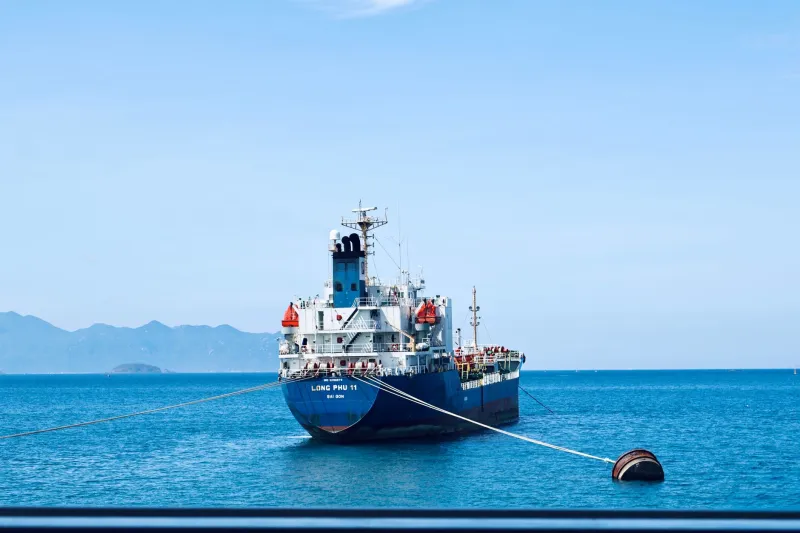
Ocean freight, while cheaper per kilogram, ties up inventory in transit for four to six weeks from Vietnam to US West Coast ports, and longer for East Coast destinations. During that window, the importer has paid for goods that are neither available for sale nor capable of generating revenue. In a high-interest-rate environment, the carrying cost of that in-transit inventory is non-trivial.
By shifting higher-velocity, higher-margin products to air freight selectively, importers can reduce average in-transit inventory days for those items — improving cash conversion cycles without abandoning ocean freight for the bulk of their volume. The result is a portfolio approach to freight that mirrors, in some respects, the portfolio logic applied to financial assets: diversification across modes to optimize the risk-return profile of the overall supply chain.
Building the Capability, Not Just the Strategy
The shift to a dynamic, multi-modal freight posture is not primarily a technology purchase. It is an organizational capability built over time through better data practices, stronger carrier relationships, and a planning culture that treats freight mode selection as an ongoing decision rather than a seasonal one.
For US importers sourcing from Vietnam, the opportunity is substantial. Vietnam's manufacturing base continues to expand across electronics, apparel, furniture, and industrial goods — and the freight infrastructure serving it, including both its expanding air cargo capacity and its deepening ocean liner connectivity, is maturing to support more sophisticated logistics strategies.
The companies best positioned to capture that opportunity will be those that have already built the internal processes and external partnerships to move fluidly between modes. In a supply chain environment defined by uncertainty, that flexibility is not a luxury. It is a competitive necessity.