Seven Vietnam Freight Assumptions Worth Retiring Before Your Next Booking
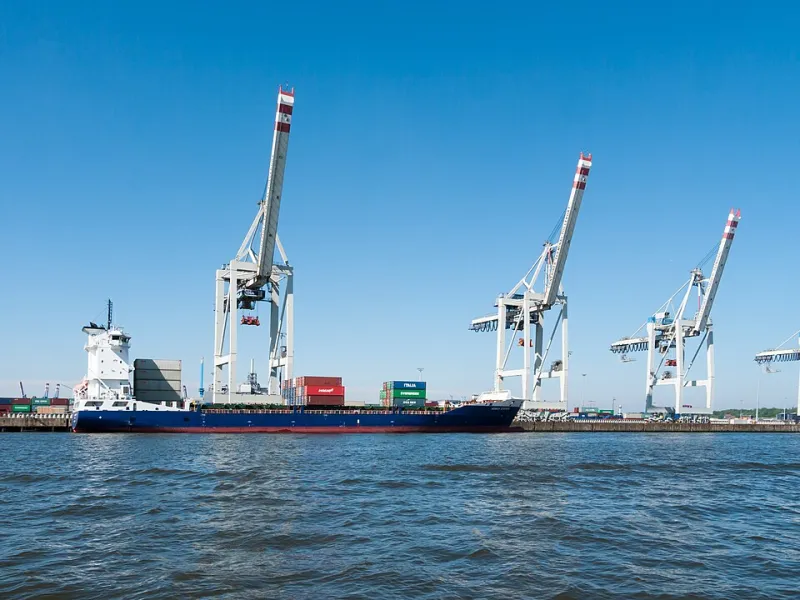
Photo: Matti Blume, CC BY-SA 4.0, via Wikimedia Commons
Vietnam has become a fixture in American sourcing plans, and familiarity has brought a set of shorthand beliefs that get repeated in planning meetings until they sound like facts. Some were reasonable a decade ago. Several were never true at all. The costly ones are rarely dramatic in isolation — they surface as a slightly worse rate, a slightly longer dwell, a surcharge nobody questioned. Stack seven of those across a year of bookings and the total stops being slight.
What follows are the assumptions we hear most often from US importers, paired with what the operating reality looks like today and what to do about it.
Assumption One: Vietnam Is a Single Port, and It Is Perpetually Congested
Headlines about backlogs in Ho Chi Minh City get applied to the entire country, which is roughly like describing US logistics based on one week at the Port of Savannah. Vietnam actually runs on three distinct gateway clusters: the deepwater terminals at Cai Mep–Thi Vai in Ba Ria–Vung Tau province, the river terminals of Cat Lai and Hiep Phuoc inside Ho Chi Minh City, and the Lach Huyen terminals serving Hai Phong in the north.
Congestion is terminal-specific and service-string-specific. One carrier's loop may be berthing on schedule while another waits three days for a window. Importers who ask for berth-level and string-level data rather than a country-wide average frequently discover their cargo was never in the queue they feared.
Assumption Two: Air Freight Is Always Faster
Port-to-port, yes. Door-to-door, sometimes not. A Vietnam air shipment carries its own clock: cargo cutoffs that fall hours before departure, security screening, build-up at Tan Son Nhat or Noi Bai, arrival handling, and then the step US buyers habitually leave out of their math — deconsolidation, customs release, and drayage to an inland distribution center.
When a supplier sits four hours from Noi Bai and the receiving warehouse is two days by truck from Los Angeles, the air advantage can compress to a day or two over an efficient ocean-rail routing. Compare door-to-door transit, cutoffs included, and insist your forwarder quotes it that way.
Assumption Three: The Lowest Quote Is the Lowest Cost
Rates published in a portal rarely resemble the final invoice. Chassis provision, ISF filing, documentation, destination terminal fees, exam and hold charges, demurrage, detention, rail ramp handling, and chassis splits all live outside the headline number. A lane that looks forty dollars cheaper per container can cost several hundred more once a single exam or a two-day chassis split is added.
Normalize every bid to the same twelve-line landed cost template before you compare anything, and ask specifically which charges are fixed and which are passed through at cost.
Assumption Four: Customs Is Where Shipments Stall
Brokers see the delay, so customs absorbs the blame. The root cause usually sits upstream: a commercial invoice that describes goods in language too vague for a defensible HTS classification, missing manufacturer information needed for Section 301 or antidumping scope analysis, or origin documentation that does not match the factory named on the entry file. By the time the container reaches Los Angeles or Savannah, the correction is a phone call to Asia and a week of dwell.
Assumption Five: A Full Container Is Always Cheaper Than LCL
Below roughly a dozen cubic meters, the arithmetic often flips. LCL's per-cubic-meter rate looks punishing, but the comparison usually ignores what a full-container commitment costs when production slips: detention, storage, and a rebooking at whatever the spot market says that week. Buyer's consolidation — several Vietnamese suppliers loaded into one container — is often the sensible middle path that nobody quotes unless asked.
Assumption Six: North and South Vietnam Are Interchangeable
Drayage economics differ sharply. A supplier in Bac Ninh shipping through Hai Phong faces a materially different inland cost and a different equipment pool than one in Binh Duong shipping through Cai Mep. Ocean strings differ as well: services calling Cai Mep connect to the US West Coast on a different cadence than those loading in the north, and transshipment points are not the same.
Route the factory, not the country. A network map that treats Vietnam as a single point of origin will misprice half your suppliers.
Assumption Seven: Booking Early Locks Your Rate and Your Space
Contract bookings with named-account allocations do protect space. A spot booking made six weeks out does not. Blank sailings and rollovers can leave a confirmed booking sitting on the quay while a later, higher-rated container gets loaded ahead of it. Ask what allocation actually sits behind your booking, and get the rollover policy in writing rather than in conversation.
What to Ask Instead
- Which specific terminal and service string will carry this cargo, and what has its on-time performance been over the last quarter?
- What is the door-to-door transit, including origin cutoffs and destination availability?
- Which accessorials are fixed, and which are billed at cost with documentation?
- What allocation protects this booking, and what happens if the vessel rolls?
- Where is the documentation risk on this shipment, and who owns the correction?
The Takeaway
None of these assumptions is exotic. That is precisely the problem — they are comfortable, they circulate freely, and each one shaves a little margin off a shipment that otherwise looked well planned. Retiring them costs a few hours of diligence per lane and pays for itself in the first quarter of bookings.