The Geographic Risk You're Not Pricing In: What Supplier Concentration in Vietnam Is Costing US Companies

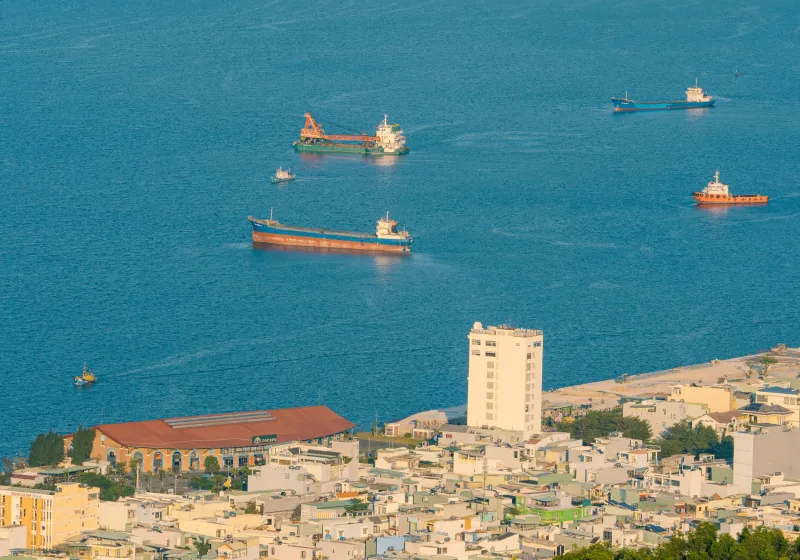
Photo by Photo by Andy Bridge on Unsplash on Unsplash
Vietnam's emergence as a global manufacturing hub has been one of the defining supply chain stories of the past decade. US companies have moved production there in significant numbers, drawn by competitive labor costs, improving infrastructure, and a government actively courting foreign investment. What many of those companies have not fully examined, however, is the geographic structure of the manufacturing capacity they are relying on—and the systemic risk that structure creates.
Vietnam's industrial base is not evenly distributed. It is clustered. Textile and garment production is concentrated in specific provinces in the north and south. Electronics manufacturing has gravitated toward industrial parks in Bac Ninh, Thai Nguyen, and the Hanoi periphery. Footwear production clusters around Binh Duong and Dong Nai. Furniture manufacturing is heavily concentrated in the southern provinces.
This clustering is not accidental—it reflects the economics of shared infrastructure, labor pools, and supplier networks. But it creates a vulnerability that most US importers have not priced into their risk models: when something goes wrong in one of these clusters, it goes wrong for everyone sourcing from it simultaneously.
How Cluster Risk Becomes Supply Chain Crisis
The mechanics of cluster-related disruption are worth examining in concrete terms. Consider a US retailer sourcing apparel from multiple suppliers, all located within the same province in northern Vietnam. On paper, this looks like supplier diversification—multiple factories, multiple contracts, multiple points of production. In practice, however, those suppliers share the same port access, the same trucking corridors, the same labor market, and often the same upstream raw material suppliers.
When a labor dispute, a flooding event, a regulatory change, or a port congestion episode affects that province, it does not affect one supplier. It affects all of them, simultaneously, and often affects the logistics infrastructure connecting them to export facilities at the same time. The importer who believed they had supplier redundancy discovers they had geographic concentration disguised as diversification.
This dynamic has played out repeatedly across Vietnam's manufacturing regions. Flooding in the Mekong Delta has disrupted agricultural processing and packaging operations that feed into export supply chains. Congestion events at Cat Lai Port have backed up cargo from suppliers across the southern industrial belt simultaneously. Labor shortages following extended holiday periods have affected entire provincial manufacturing ecosystems rather than individual facilities.
The Port Chokepoint Problem
Geographic concentration compounds at the port level. A significant share of Vietnam's export cargo moves through a small number of major facilities—Cat Lai in Ho Chi Minh City and Hai Phong in the north handle the majority of container volume. When capacity at either facility is constrained, the effects ripple across all suppliers in the surrounding region regardless of their individual performance.
For US importers whose suppliers are concentrated near a single port, this creates a structural single point of failure that no amount of supplier relationship management can fully mitigate. The cargo may be ready, the supplier may be performing, and the logistics provider may be executing correctly—but if the port is congested, the shipment is delayed.
Diversifying across Vietnam's secondary port infrastructure—including Da Nang in the central region and the expanding facilities at Lach Huyen near Hai Phong—is one lever for reducing this exposure. But it requires advance coordination with logistics partners who have established operations at those facilities, not simply an assumption that alternative routing is available on demand.
Building Redundancy Without Rebuilding Everything
The response to geographic concentration risk does not require a wholesale restructuring of a Vietnam sourcing strategy. It requires deliberate, targeted redundancy built around the specific failure modes most likely to affect your supply chain.
The first step is mapping your actual geographic exposure. This means going beyond supplier names and contract terms to understand where each supplier's production facilities are physically located, which ports and trucking corridors they use for export, and which upstream suppliers provide their critical inputs. Many US importers discover at this stage that their supplier base is more geographically concentrated than their sourcing records suggested.
The second step is identifying the failure scenarios with the highest probability and highest impact for your specific product categories. A US electronics importer sourcing from the Bac Ninh cluster faces different risk scenarios than a furniture importer concentrated in Binh Duong. The redundancy strategy should be calibrated to the actual risk profile, not a generic checklist.
The third step is establishing at least one qualified alternative supplier in a geographically distinct location before that alternative is needed. This does not require splitting production equally—it requires maintaining a relationship, completing qualification processes, and placing occasional orders sufficient to keep the supplier engaged and current with your specifications. The cost of maintaining a secondary supplier relationship is substantially lower than the cost of emergency qualification during a supply disruption.
The Logistics Dimension of Geographic Redundancy
Building geographic redundancy into your supplier base also requires building it into your logistics arrangements. A secondary supplier in a different province is of limited value if your logistics provider lacks operational capability in that region. Ensure that any forwarder you work with has genuine, not theoretical, coverage across the Vietnamese provinces relevant to your redundancy strategy—including ground transportation, customs brokerage, and export documentation support.
Air freight plays a specific role in geographic redundancy planning. When a disruption affects ocean freight capacity or port access in one region, air freight from an alternative airport can provide a bridge that keeps product flowing while the disruption resolves. Vietnam's regional airports—including Da Nang International and Can Tho—have expanded cargo capacity in recent years, offering options that did not exist at practical scale a decade ago.
Concentration Risk Is a Business Decision, Not Just a Logistics Problem
Ultimately, geographic supplier concentration in Vietnam is not purely a logistics challenge—it is a business risk that belongs in the same conversation as supplier financial health, quality performance, and compliance posture. US companies that have invested significantly in Vietnam sourcing should be conducting regular reviews of their geographic exposure with the same rigor they apply to other dimensions of supplier risk management.
The companies that will navigate Vietnam's supply chain complexity most effectively are not those with the most suppliers or the most sophisticated logistics arrangements. They are the ones who understand where their exposure is concentrated—and have built enough redundancy, in the right places, to absorb the disruptions that are not a matter of if, but when.