More Partners, Less Chaos: The Case for a Specialized Freight Network Over a Single Vietnam Logistics Generalist

Ask most US supply chain managers what they want from their Vietnam freight setup, and the answer is almost always some version of simplicity. One point of contact. One invoice. One throat to choke when something goes wrong. The appeal is understandable. Vietnam-origin supply chains involve enough moving parts—production lead times, export documentation, customs compliance, carrier capacity—that the idea of consolidating all of it under a single logistics provider feels like a rational response to operational complexity.
The problem is that this instinct, however logical it seems, frequently produces the opposite of what it promises. And the mechanism behind that failure is worth examining carefully.
Why the Generalist Model Underdelivers
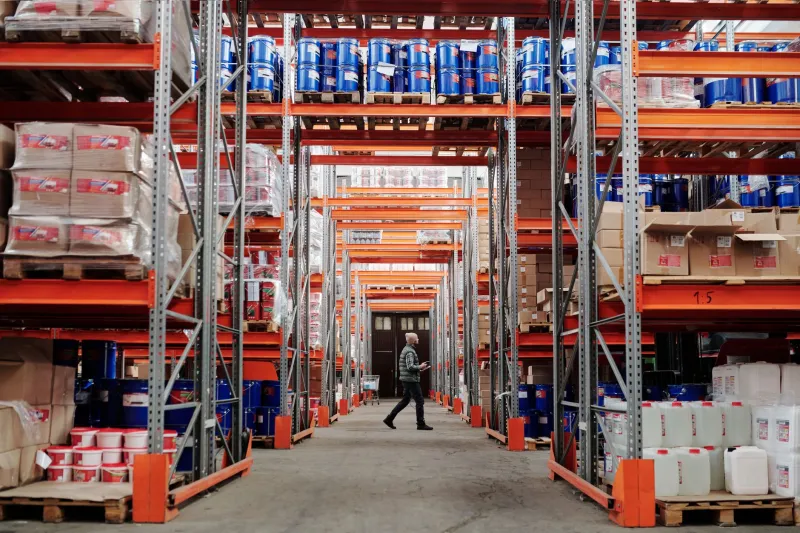
A single logistics provider covering the full scope of Vietnam freight operations—air and ocean forwarding, customs brokerage, inland trucking, warehousing, and documentation—is, by definition, a generalist. It may be a large and capable generalist, but its operational model is built around breadth rather than depth.
The consequences of this structure are predictable. When a shipment requires specialized knowledge—of a specific commodity type, a particular export corridor, or a niche regulatory requirement—the generalist provider applies a standardized process rather than deep expertise. When capacity becomes constrained on a specific route, the generalist's response is limited by its existing carrier relationships rather than expanded by a flexible network. When pricing optimization is possible, the generalist's commercial incentives may not align with the importer's interest in finding the best available rate.
Perhaps most significantly, when something goes wrong—a customs hold, a missed booking, a documentation error—accountability within a single-provider model diffuses across internal departments. The importer has one contact, but that contact may have limited visibility into the specific failure point, and the resolution path is often slower than it would be with a specialized partner who owns that function entirely.
The Counterintuitive Math of Specialization
FPT MultiAir's operational data across client accounts reveals a consistent pattern: importers who transition from a single generalist to a coordinated network of three to four specialized Vietnamese freight partners see measurable improvements across the metrics that matter most.
Visibility improves because each partner in the network owns a defined scope and is accountable for performance within that scope. When a warehousing specialist manages export consolidation and an air freight specialist manages carrier booking, the importer receives more precise, function-specific updates rather than aggregated status reports that obscure where delays are actually occurring.
Decision-making accelerates because specialized partners have deeper market knowledge in their domain. An air freight partner who works exclusively with Vietnam-to-US routes has more current intelligence on carrier capacity, rate trends, and routing options than a generalist managing the same function as one of fifteen service lines.
Total landed costs decline because specialization creates genuine competitive pressure. When an importer's air freight function is handled by a partner who knows that function is being evaluated on its own merits, the commercial relationship is more disciplined than when freight is bundled into a broader service agreement where individual components are difficult to benchmark.
In client transitions reviewed over the past 18 months, the shift from generalist to specialized network consistently produced total cost reductions in the range of 12 to 22 percent, with the largest gains concentrated in air freight and customs clearance.
The Coordination Objection—and Why It Misses the Point
The most common objection to the multi-partner model is that it creates a coordination burden the importer must absorb. If four partners are each managing a piece of the freight operation, who ensures those pieces connect?
This is a legitimate question, but it reflects a misunderstanding of how a well-designed freight network operates. The coordination layer in a specialized network is not the importer's logistics team. It is a lead freight partner—typically the air or ocean forwarder with the broadest operational scope—who manages the interface between partners and presents the importer with a unified operational picture.
FPT MultiAir functions in exactly this role for clients who have transitioned to a network model. We maintain direct relationships with specialized partners across Vietnam's freight ecosystem—including regional consolidators, bonded warehouse operators, customs agents with specific commodity expertise, and inland transport providers covering factory-to-airport corridors in both the north and south of the country. Our clients do not manage those relationships individually. They interface with us, and we ensure the network delivers as a coordinated whole.
The result is that the importer retains the simplicity of a primary contact while gaining the depth and flexibility of a specialized network. The coordination complexity exists, but it sits inside the network rather than on the importer's desk.
Where Generalists Still Add Value—and Where They Don't
This analysis is not an argument that generalist logistics providers are without merit. For importers with low freight volumes, limited commodity complexity, or supply chains that are genuinely simple in structure, a capable generalist may be entirely appropriate. The overhead of managing even a well-coordinated network has a threshold below which it does not generate sufficient return.
But for US importers sourcing regularly from Vietnam—particularly those managing multiple product categories, working with factories across different regions of the country, or operating on time-sensitive seasonal cycles—the generalist model's limitations become structurally significant. The scenarios where a single provider can genuinely optimize across air freight, ocean freight, customs, and inland logistics simultaneously are narrower than most importers assume.
The freight operations that perform best in Vietnam are not the most consolidated. They are the most precisely engineered—built around partners who are exceptional at specific functions rather than adequate across all of them.
Designing the Network, Not Just Selecting the Partners
Transitioning to a specialized freight network is not simply a matter of replacing one provider with several. The network must be designed with intention: clear scope definitions for each partner, explicit performance metrics, defined escalation paths, and a coordination model that prevents gaps between functions.
At FPT MultiAir, the process of building a client's Vietnam freight network begins with a detailed mapping of the existing operation—where volume concentrates, where delays recur, where cost overruns are most frequent. That map typically reveals two or three specific functions where a specialized partner would outperform the current arrangement, and those become the first points of transition.
The goal is not to maximize the number of partners. It is to match each critical function in the freight operation with the partner best equipped to execute it—and to connect those partners through a coordination structure that makes the whole more capable than the sum of its parts.
Simplicity is a legitimate operational goal. But in Vietnam freight, the path to genuine simplicity runs through specialization, not consolidation.