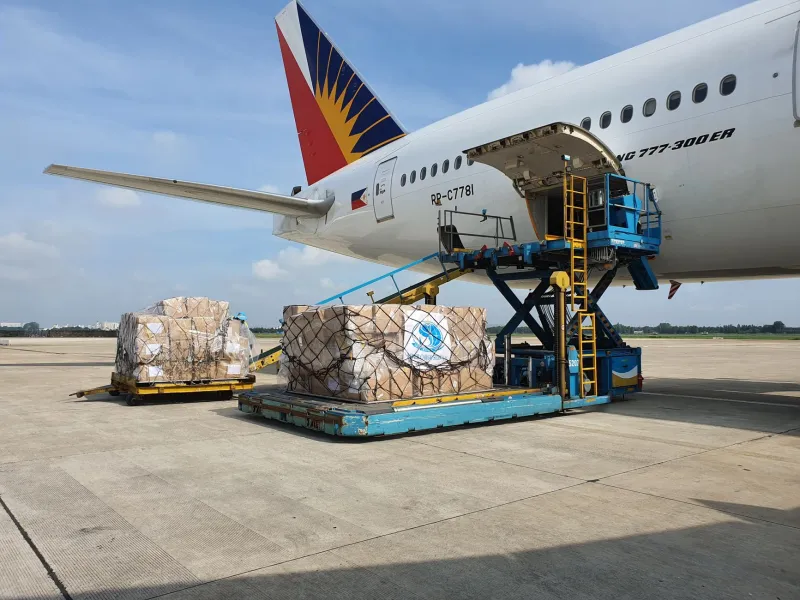
One Load, Multiple Problems: The Hidden Downside of Air Freight Consolidation from Vietnam

The logic seems airtight: if you are sourcing from three factories in Vietnam and all three shipments are heading to the same US distribution center, why not combine them into one air freight load? You reduce handling fees, negotiate a single rate, and streamline documentation. On paper, the savings are obvious. In practice, the approach regularly produces delays, unexpected charges, and customs complications that erode every dollar of projected benefit.
For US importers managing multi-supplier networks across Vietnam, consolidation is one of the most consequential—and least scrutinized—decisions in the outbound freight process. Understanding precisely when it works, and when it does not, is essential to protecting both margins and delivery timelines.
What Consolidation Actually Involves
Air freight consolidation in the Vietnam context typically means one of two things. The first is a forwarder-managed groupage arrangement, where your cargo is combined with other shippers' goods into a single unit load device (ULD). The second is an importer-directed consolidation, where you deliberately wait for multiple factory orders to reach a single staging point before releasing them together.
Both approaches carry distinct risk profiles. Forwarder-managed groupage introduces variables you cannot control—other shippers' delays, routing decisions made for the benefit of the overall load, and priority allocations that may not favor your cargo. Importer-directed consolidation places the scheduling burden on your supply chain team and creates a single point of failure at the warehouse or staging facility.
In either case, the underlying assumption—that combining shipments reduces total cost—deserves rigorous examination before each shipment cycle, not just once during initial carrier negotiations.
The Warehouse Hold Problem
One of the most common and underestimated costs in consolidation strategies is the warehouse dwell period. When three factories are producing on different schedules, the first shipment to arrive at the consolidation point sits in storage waiting for the others. That wait time is rarely free.
Consider a scenario that plays out regularly on the Vietnam-US corridor: a garment manufacturer in Binh Duong completes production five days ahead of a hardware accessories supplier in Dong Nai. Both shipments are destined for a retailer in California. The importer's freight forwarder holds the garment shipment at a Ho Chi Minh City warehouse pending arrival of the hardware goods. Storage fees accumulate. More significantly, the garment shipment misses an earlier flight that would have delivered it ahead of a promotional event deadline.
The cost of that delay—lost sales, expedited last-mile delivery at the destination, and customer service overhead—far exceeded the freight savings the consolidation was designed to achieve. This is not an unusual outcome. It is a structural risk embedded in any consolidation strategy that depends on synchronized production timelines across independent suppliers.
Customs Complications Multiply with Complexity
US Customs and Border Protection applies scrutiny proportional to complexity. A consolidated air shipment containing goods from multiple Vietnamese manufacturers, covering multiple HTS codes, with mixed valuation structures, is inherently more complex than a single-origin, single-category load.
This complexity creates several downstream risks. First, if one component of a consolidated shipment triggers a customs hold—due to documentation discrepancies, valuation questions, or random examination—the entire load may be detained. A single supplier's paperwork error can strand goods from three other suppliers who filed correctly.
Second, the anti-dumping and countervailing duty landscape for Vietnamese exports to the United States is active and evolving. Mixing goods subject to different duty regimes in a single consolidated load requires precise documentation management. Errors in this area are not simply administrative inconveniences—they carry financial penalties and can trigger broader compliance reviews.
Third, the Importer Security Filing (ISF) requirements for air freight demand accurate, supplier-specific data. Consolidation across multiple suppliers increases the probability of data inconsistencies that flag shipments for additional scrutiny.
The False Economy of Spreading Risk
A related argument sometimes made in favor of consolidation is that it spreads risk across a single shipment event rather than creating multiple exposure points. This reasoning inverts the actual risk structure. Concentrating multiple suppliers' goods into one load does not reduce risk—it amplifies the consequences of any single failure point.
If a consolidated load is delayed, damaged, or detained, the operational impact cascades across every product line and supplier relationship in that load. If those same goods travel as separate shipments, a problem affecting one load leaves the others unaffected. For US importers managing diverse product portfolios with different downstream customers or deadlines, the resilience argument strongly favors splitting shipments.
When Consolidation Does Make Sense
This analysis is not an argument against consolidation in all circumstances. There are genuine scenarios where combining shipments produces net savings without unacceptable risk.
Consolidation tends to perform well when all contributing suppliers are operating on tightly synchronized production schedules, when goods share the same HTS classifications and duty treatment, when the combined weight and volume achieve meaningful rate tier improvements, and when delivery timelines are sufficiently flexible to absorb minor staging delays without business impact.
For importers managing high-volume, standardized product lines from a small number of reliable long-term suppliers, consolidation can be a disciplined and profitable strategy. The key is that the decision should be made shipment by shipment, based on current production realities, not applied as a default policy regardless of conditions.
A Framework for the Decision
Before committing to consolidation on any Vietnam-US air freight movement, US procurement and logistics teams should evaluate four variables: production synchronization across all contributing suppliers, the customs complexity profile of the combined load, the financial and operational consequences of a potential delay to the full consolidated shipment, and the actual rate differential between consolidated and split shipments after all ancillary fees are included.
That last point deserves emphasis. Consolidation quotes frequently exclude or minimize staging fees, documentation handling charges, and the cost of potential delays. A fully loaded cost comparison between consolidation and separate shipments often reveals a much narrower advantage than the headline rate suggests—and sometimes reveals that splitting shipments is the less expensive option.
At FPT MultiAir, we work with US importers to model these decisions accurately, accounting for the full operational and financial picture rather than the simplified rate comparison that consolidation proposals typically present. The goal is not to default to any particular freight structure, but to select the approach that best serves each shipment's specific requirements.
Consolidation is a tool, not a strategy. Used with precision and appropriate skepticism, it has its place. Treated as a standing policy, it regularly produces the kind of costly surprises that erode the margins Vietnam sourcing is designed to protect.