Rethinking the Gateway: How Diversifying Beyond Vietnam's Major Airports Can Cut US Importer Freight Costs by 25%
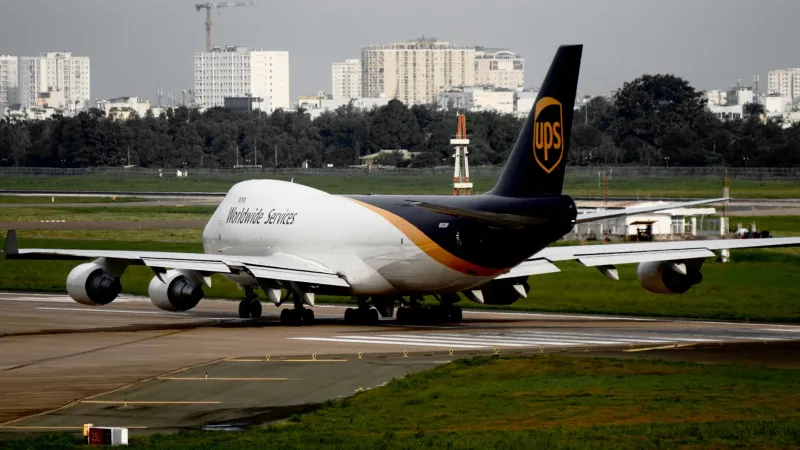
For most US companies sourcing goods from Vietnam, the logistics playbook reads the same way it has for years: finish production in the south, truck everything to Tan Son Nhat International Airport in Ho Chi Minh City, and load it onto the next available freighter. Companies sourcing from northern manufacturers follow an equally familiar script, routing cargo through Noi Bai International Airport in Hanoi. Both airports are well-connected, well-understood, and — increasingly — well over capacity.
What that playbook rarely accounts for is the cost of habit. While American importers continue to default to Vietnam's two dominant air cargo gateways, a meaningful share of their freight dollars is being absorbed by congestion surcharges, extended dwell times, and rate premiums that are structurally tied to constrained infrastructure. The question worth asking in 2025 is not whether these airports work — they do — but whether they represent the best available option for every shipment, every season.
The answer, for a growing number of logistics professionals, is increasingly: no.
The Capacity Problem at Vietnam's Primary Gateways
Tan Son Nhat handles the largest volume of international air cargo in Vietnam, but it operates in a physical environment that has not kept pace with demand. The airport's single cargo terminal was not designed to accommodate the freight volumes generated by Vietnam's rapid ascent as a global manufacturing hub. During peak shipping periods — typically Q3 and Q4 as US retailers prepare for holiday inventory cycles — the terminal experiences congestion that translates directly into measurable delays.
Carriers responding to tight ramp space and handling backlogs frequently impose peak-season surcharges that can add $0.50 to $1.20 per kilogram on top of base rates. For a US importer moving 10,000 kilograms of electronics or apparel, that premium represents a five-figure cost increase on a single shipment. Multiply that across a full fiscal quarter and the financial impact becomes difficult to ignore.
Noi Bai faces a parallel set of challenges in the north. While it benefits from newer infrastructure relative to Tan Son Nhat, its cargo capacity is increasingly strained by the expansion of manufacturing clusters in Hanoi's surrounding provinces — particularly in sectors like semiconductors and industrial components, where US buyers have been placing new orders at an accelerating pace.
Da Nang: The Central Hub That Logistics Teams Are Overlooking
Da Nang International Airport occupies a geographic position that gives it an underappreciated logistical advantage. Situated roughly midway between Ho Chi Minh City and Hanoi, it serves as a natural consolidation point for manufacturers operating across Vietnam's central provinces, including those in Quang Nam and Binh Dinh — regions that have attracted significant foreign direct investment in furniture, textiles, and light manufacturing.
For US importers sourcing from central Vietnam, routing cargo through Da Nang rather than trucking it south to Ho Chi Minh City or north to Hanoi can eliminate anywhere from 12 to 18 hours of ground transit time. That reduction in pre-flight handling not only accelerates total door-to-door delivery but also lowers the risk of damage and documentation errors that accumulate with each additional handling point.
On the rate side, Da Nang consistently offers spot pricing that runs 10 to 18 percent below comparable capacity out of Tan Son Nhat during peak periods. The airport's cargo facilities, while smaller, operate with shorter queue times and more predictable handling windows — factors that matter considerably for time-sensitive shipments where missed connections carry real financial consequences.
Cam Ranh and the Case for Southern Diversification
Cam Ranh International Airport in Khanh Hoa Province is less frequently discussed in US logistics circles, but it deserves attention from importers whose manufacturing partners operate along Vietnam's south-central coast. The airport has seen infrastructure investment in recent years, and its cargo handling capacity — while modest by comparison to major hubs — is precisely suited to the shipment volumes that small and mid-sized US importers typically move.
What Cam Ranh offers that Tan Son Nhat cannot is availability. During periods when Ho Chi Minh City's primary airport is operating at or near capacity, Cam Ranh can provide access to freighter services with shorter booking lead times and more competitive rates. For importers managing lean inventory models — where a two-day delay can trigger stockout conditions at US distribution centers — that availability carries value that does not always appear on a freight quote.
Transit time from Cam Ranh to major US gateways like Los Angeles or Chicago runs roughly comparable to routing through Ho Chi Minh City when ground transport delays at Tan Son Nhat are factored into the calculation. In certain scenarios, the total end-to-end time is actually shorter.
Building a Multi-Airport Strategy: What It Actually Requires
The practical barrier to airport diversification is not infrastructure — Vietnam's regional airports are capable of handling the volumes most US importers move. The barrier is coordination. A multi-airport strategy requires freight partners who maintain active relationships with handlers and carriers at secondary hubs, not merely with the dominant players at Tan Son Nhat and Noi Bai.
It also requires a willingness to segment shipments by origin point rather than consolidating everything to the nearest major gateway by default. US importers with suppliers spread across multiple Vietnamese provinces should be asking their logistics providers a direct question: is this cargo being routed through the optimal airport, or simply the most familiar one?
Documentation and customs processes at secondary airports are governed by the same Vietnamese regulatory framework as primary gateways. Export clearance timelines are comparable, and US Customs and Border Protection processes inbound cargo based on the shipment's contents and declared value — not the airport of origin. There is no regulatory penalty for using Da Nang over Tan Son Nhat.
The Financial Case for Rethinking Airport Selection
Across a full year of freight activity, US importers who actively manage airport selection as a strategic variable — rather than defaulting to the same two gateways — have reported freight cost reductions in the range of 15 to 25 percent. That figure accounts for rate differentials, reduced congestion surcharges, and lower incidence of delay-related costs including expedite fees and inventory shortfalls.
For a mid-sized US importer moving $3 million in annual air freight from Vietnam, a 20 percent cost reduction represents $600,000 returned to margin — without changing suppliers, renegotiating contracts, or compromising on delivery performance.
The airports exist. The capacity is available. The question for US logistics and procurement teams is whether their current freight strategy is actually optimized, or simply comfortable.
At FPT MultiAir, we work with US importers to evaluate their full Vietnam freight footprint — including airport selection — and identify where structural inefficiencies are inflating costs. If your Vietnam air freight is consistently routing through the same gateway regardless of origin point, it may be time to examine what that habit is actually costing you.