Flight Time Is Not Transit Time: What US Importers Must Understand About Air Freight Performance From Vietnam
When American procurement teams evaluate air freight options from Vietnam, the conversation frequently gravitates toward a single figure: the number of hours a flight takes to reach Los Angeles, Chicago, or New York. It is a natural instinct. Shorter flight times suggest faster delivery, and faster delivery translates—at least in theory—to competitive advantage, leaner inventory buffers, and stronger responsiveness to market demand.
The problem is that flight duration and actual transit time are not the same measurement. They rarely even occupy the same order of magnitude when the full shipment lifecycle is accounted for. US importers who build their logistics plans around advertised flight schedules are, in effect, measuring the middle of the journey while ignoring the parts that most frequently determine when goods actually arrive at an American distribution center.
The Illusion of the Fastest Route
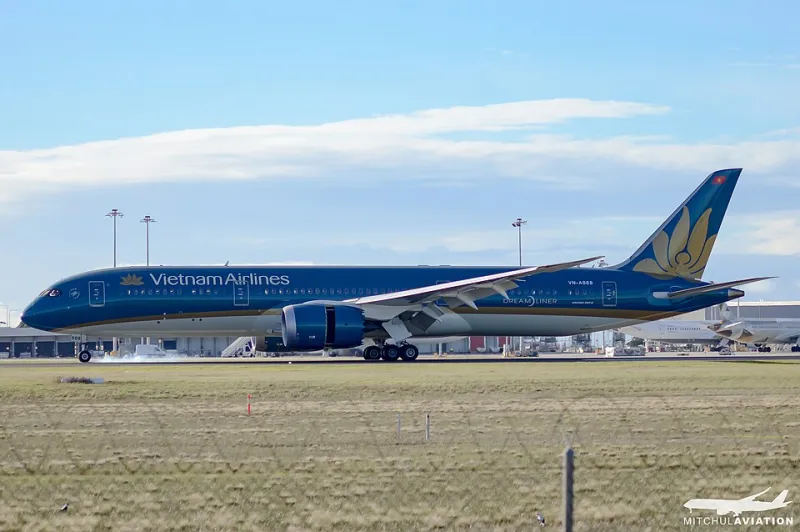
Vietnam's primary air freight gateways—Tan Son Nhat International Airport in Ho Chi Minh City and Noi Bai International Airport in Hanoi—offer connections to the United States through a mix of direct and transiting services. Certain carriers advertise routing options that appear meaningfully faster than competitors, sometimes by four to six hours on paper.
Those hours, however, are absorbed almost immediately by realities that exist outside the aircraft itself. A shipment that nominally departs on a faster routing may still sit in a cargo terminal for 18 to 36 hours awaiting consolidation or a scheduled departure window. A carrier offering the quickest transpacific leg may operate out of a terminal with slower pre-departure documentation processing. The advertised speed advantage evaporates before the plane leaves Vietnamese airspace.
This is not a flaw unique to any single carrier or airport. It is a structural characteristic of high-volume air freight operations in a market where export capacity is under consistent pressure. Understanding it is not optional for US importers—it is a prerequisite for accurate planning.
Pre-Departure Friction: Where Time Is Lost Before Takeoff
The timeline for an air freight shipment from Vietnam begins well before cargo is loaded onto an aircraft. Several distinct processes must be completed in sequence, and each carries its own variability.
Export customs clearance is among the most consequential. Vietnam's customs authority requires documentation that is accurate, complete, and consistent across all accompanying paperwork. Discrepancies between commercial invoices, packing lists, and certificates of origin—even minor formatting inconsistencies—can trigger holds that delay release by 24 hours or more. For shipments containing goods subject to additional inspection categories, the window extends further.
Cargo acceptance cutoffs impose another constraint. Most carriers operating out of Ho Chi Minh City and Hanoi enforce strict cutoff windows that require cargo to be physically accepted and documented several hours before scheduled departure. Missing a cutoff by even a small margin typically means rebooking to the next available flight, which may not depart for another full day depending on frequency and available capacity on that routing.
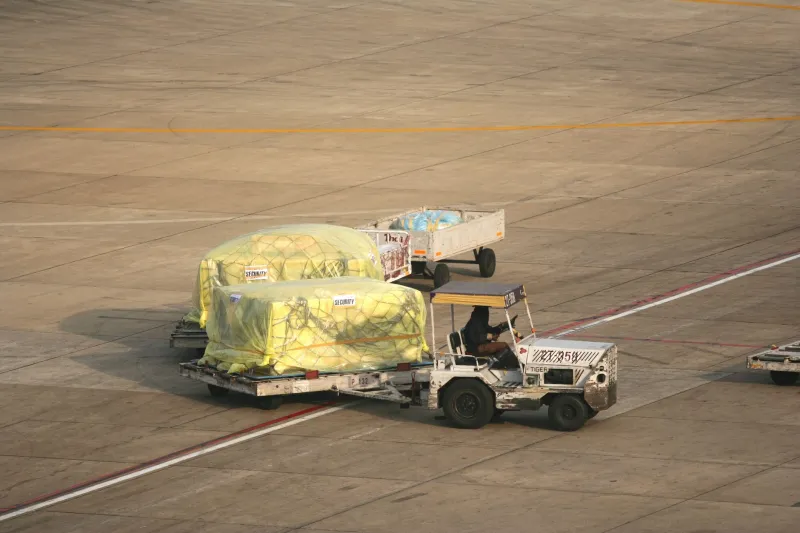
Cargo build-up and unit load device preparation add additional time. For consolidated shipments in particular, cargo may arrive at the terminal within the acceptance window but still require palletization, weight and balance verification, and assignment to a specific flight. These steps are procedurally routine but not instantaneous, and they occur within facilities that are managing high volumes simultaneously.
Cumulatively, these pre-departure processes routinely add 24 to 72 hours to a shipment's effective start time—before any flight duration is relevant.
The Transit Hub Variable
Many air freight services connecting Vietnam to the United States route through intermediate hubs in East Asia, the Middle East, or Europe. Hub connections are often presented as minor scheduling details, but they introduce a category of risk that deserves closer scrutiny.
At a transit hub, cargo must be offloaded, cleared for onward movement, and reloaded onto a connecting aircraft. Under normal operating conditions, this process is managed within the scheduled connection window. Under congested conditions—which are common at major cargo hubs during peak seasons, adverse weather events, or when aircraft substitutions occur—cargo misses its connection and must await the next available service.
For some hub routings, the next available onward service to the United States may not depart for 12 to 24 hours. A single missed connection can erase any speed advantage the original routing offered and introduce a delay that was entirely invisible in the original transit time estimate.
US importers evaluating routing options should ask specifically about hub connection windows and historical on-time performance at those hubs—not just the total advertised transit time.
Post-Arrival Processing: The Final Layer of Delay
When a shipment lands at a US gateway airport, the clock does not stop. US Customs and Border Protection must process the entry, which involves electronic filing review, potential examination, and formal release. For shipments entering under standard procedures, processing times vary based on filing accuracy, commodity classification, and the volume of cargo CBP is handling at that facility on a given day.
Shipments selected for physical examination—a determination that importers cannot fully predict or control—face additional holding time that can range from hours to several days depending on examination type and CBP staffing at the port of entry. Certain commodity categories, including electronics components, textiles, and goods with complex country-of-origin considerations, carry higher examination rates.
Following customs release, domestic ground transportation introduces its own timeline. Cargo released at Los Angeles International Airport that is destined for a warehouse in the Midwest requires additional transit time that is entirely separate from anything the air freight carrier controls. The total door-to-door timeline must account for this final segment.
A Framework for Calculating True Transit Time
Rather than evaluating air freight options on advertised flight duration alone, US importers benefit from constructing a complete transit time model that incorporates each segment of the journey.
A practical framework includes the following components:
- Pre-departure processing time: Estimated time from cargo ready date to actual aircraft departure, accounting for export customs clearance, cargo acceptance cutoffs, and terminal build-up procedures.
- Flight duration and hub connection risk: Total air transit time including layovers, with an assessment of connection window reliability at intermediate hubs.
- US customs processing time: Historical processing time at the intended port of entry, adjusted for commodity type and examination risk.
- Domestic ground transit: Time from cargo release at the gateway airport to final delivery at the destination warehouse.
When this framework is applied, the difference in total transit time between a nominally faster routing and a nominally slower one frequently narrows to within hours rather than days. In some cases, a routing that appears slower on a carrier schedule card actually delivers cargo earlier because it operates through terminals with more reliable pre-departure processing or hubs with stronger connection performance.
Matching Freight Strategy to Actual Performance
For US importers sourcing from Vietnam, the practical implication is straightforward: speed rankings derived from flight schedules are insufficient as a basis for logistics decision-making. What matters is the complete, end-to-end performance of a given routing under realistic operating conditions.
This requires a different kind of due diligence. It means asking freight partners for historical transit data rather than theoretical schedules. It means understanding which carriers and which routings have demonstrated consistent performance during peak export seasons, when Vietnamese cargo terminals operate at or near capacity. And it means building transit time estimates that reflect the full journey—not just the portion that occurs at 35,000 feet.
At FPT MultiAir, our approach to air freight advisory is grounded in this complete-picture methodology. Vietnam's export logistics environment is dynamic, and the gap between advertised performance and actual performance is real. Closing that gap begins with measuring the right things.